Here is the thing almost every “best hiking dogs” list gets wrong: they rank breeds by energy level. Energy tells you whether a dog wants to go. It tells you almost nothing about whether that dog can come home safely.
The largest study of its kind — 905,543 dogs under UK veterinary care — found that when dogs get into serious trouble outdoors, the mechanism is usually heat, not distance. And the case fatality rate for heat-related illness in that study was 14.18%. Roughly one in seven dogs that developed it died.
So this guide is organised around a different question: what is this breed’s body actually built to do? Get that right and the trail takes care of itself.
The four things that actually decide it
Before any breed names, here is the framework. Four factors, in order of how likely they are to end a trip badly.
1. Heat dumping. Dogs cannot sweat meaningfully. They shed heat by panting, which means airway shape and body mass drive everything. This is the number one killer and the number one thing lists ignore.
2. Joints and growth plates. Distance, and especially descent, is repetitive load. Large breeds and young dogs pay for it. Hip dysplasia is a screened-for concern in most of the breeds on this list.
3. Recall reality. A breed that will not reliably come back is not an off-leash trail dog, no matter how athletic. Some of the most iconic “adventure” breeds are in this category — and their own breed authorities say so.
4. Coat and climate match. A double coat that makes a dog unstoppable at -20°C is a liability on an exposed August ridgeline. Match the dog to your actual weather, not the photo you have in your head.
The heat data nobody puts in these articles
This is worth its own section because it genuinely reorders the rankings.
In Scientific Reports, Hall, Carter and O’Neill analysed heat-related illness across 905,543 dogs and calculated each breed’s odds relative to the Labrador Retriever. The Lab is the baseline — everything below is a multiple of it.
| Breed | Odds of heat-related illness vs a Labrador |
|---|---|
| Chow Chow | 16.6× |
| Bulldog | 13.9× |
| French Bulldog | 6.5× |
| Dogue de Bordeaux | 5.3× |
| Greyhound | 4.3× |
| Cavalier King Charles Spaniel | 3.5× |
| Pug | 3.2× |
| English Springer Spaniel | 2.7× |
| Golden Retriever | 2.7× |
Look at the bottom two. The English Springer Spaniel and the Golden Retriever — two breeds that appear on essentially every “great hiking dog” list ever written — carry meaningfully higher heat odds than the Labrador sitting next to them at the trailhead.
Two more findings matter for trail planning:
- Brachycephalic (flat-faced) skull shape: 2.10× the odds of a normal-muzzled dog.
- Dogs over 50 kg (110 lb): 3.42× the odds — the single highest risk category by bodyweight.
That second one quietly disqualifies a lot of “big adventure dog” fantasies in summer. If you own a giant breed, your hiking season is spring, autumn and early mornings.
Not sure whether today is safe? Our pavement temperature tool estimates ground temperature from the air temperature, and our summer heat safety guide covers the warning signs worth knowing before you leave the car.
The breeds, sorted by what you actually do
Rather than a ranked list, here they are grouped by the job. Heights, weights, life expectancies and health flags below come from official AKC breed pages.
Best all-around trail dog: Labrador Retriever
22.5–24.5 in · 65–80 lb · 11–13 years
The default answer, and the honest one. Built for long working days, biddable enough to trust around other hikers, equally happy on water and dirt. It is also the reference breed in the heat study — a useful reminder that “average” here is a genuinely good result.
One breed-specific thing to know: Labs can carry exercise-induced collapse (EIC), a genetic condition with a DNA test available, and like other deep-chested breeds they are at risk of bloat. Ask any breeder about EIC status.
For the complete breed breakdown — temperament, training, feeding and health — see our full Labrador Retriever adventure guide.
Distance and endurance: German Shorthaired Pointer & Vizsla
GSP: 23–25 in · 55–70 lb · 10–12 years Vizsla: 22–24 in · 55–60 lb · 12–14 years
If your idea of a good day is twenty kilometres, these are the specialists. The AKC describes the GSP as built for power, speed, agility and endurance, and recommends ample physical activity twice a day — this is not a dog you exercise once and file away.
The Vizsla comes with the single most useful sentence in this entire article: the AKC advises that young Vizslas should not run long distances until they reach maturity at about 18 to 24 months. That principle applies far beyond the breed. If you have a puppy, this is your rule.
Cold and snow: Siberian Husky, Alaskan Malamute, Samoyed
Husky: 21–23.5 in · 45–60 lb · 12–14 years Malamute: 25 in · 85 lb · 10–14 years Samoyed: 21–23.5 in · 45–65 lb · 12–14 years
Northern breeds are engineered for cold in ways that are genuinely remarkable. Their outer coat is made of water-resistant guard hairs roughly twice the length of the dense undercoat beneath. Their paws use a counter-current heat exchange system — warm arterial blood warms the cooler returning veins — so the core stays warm while the feet keep working on ice. Small, thickly furred ears reduce frostbite risk, and that plumed tail pre-warms the air they breathe when curled up.
The trade-off is obvious and non-negotiable: everything that makes them brilliant at -20°C works against them in summer heat.
The Malamute deserves a specific mention for backpacking — it was bred to haul heavy freight, and the AKC explicitly lists backpacking, sledding and skijoring among its suitable activities. The Husky, by contrast, is notably efficient, maintaining condition on less food than similar-sized breeds, and has a comparatively low reported incidence of hip dysplasia and eye disease.
Water: Chesapeake Bay Retriever & Newfoundland
Chessie: 23–26 in · 65–80 lb · 10–13 years Newfoundland: 28 in · 130–150 lb · 9–10 years
The Chessie is the tougher, more weather-resistant cousin of the Lab, with a harsh oily outer coat over a soft undercoat, built for cold water. Like the Lab, EIC and hip dysplasia are on its screening list.
The Newfoundland is a genuine lifesaving water dog with natural rescue instincts — but read those numbers again. At 130–150 lb it sits squarely in the over-50 kg category with 3.42× heat odds, its life expectancy is only 9–10 years, and the AKC’s exercise guidance is a modest half-hour of moderate activity daily. This is a superb lake-and-campsite companion and a poor choice for a hot summit push.
Check Ruffwear Float Coat on Amazon →
More on picking one in our dog life jacket guide — even strong swimmers benefit from one in current or cold water.
Mountains and carrying a load: Bernese Mountain Dog
25–27.5 in · 80–115 lb · 7–10 years
The AKC specifically names camping and backpacking among the things Berners enjoy, and the breed’s drafting and carting heritage is real. Strong, steady, and calm at camp in a way the herding breeds rarely are.
Be clear-eyed about two things: the life expectancy is only 7–10 years, the shortest on this list, and hip and elbow dysplasia plus bloat are known concerns. A Berner is a wonderful mountain companion for moderate days in cool weather, not an endurance athlete.
Check Ruffwear Approach Pack on Amazon →
If you want a dog carrying its own kit, our dog hiking backpack guide covers fit and loading. One caution worth stating plainly: the widely repeated “dogs can carry 10–15% of bodyweight” rule has no strong published veterinary evidence behind it that we could find. Treat it as a rough convention, start far lighter, and ask your vet about your specific dog. What research does show is that carrying weight measurably shifts load onto the forelimbs, which likely adds stress to those joints.
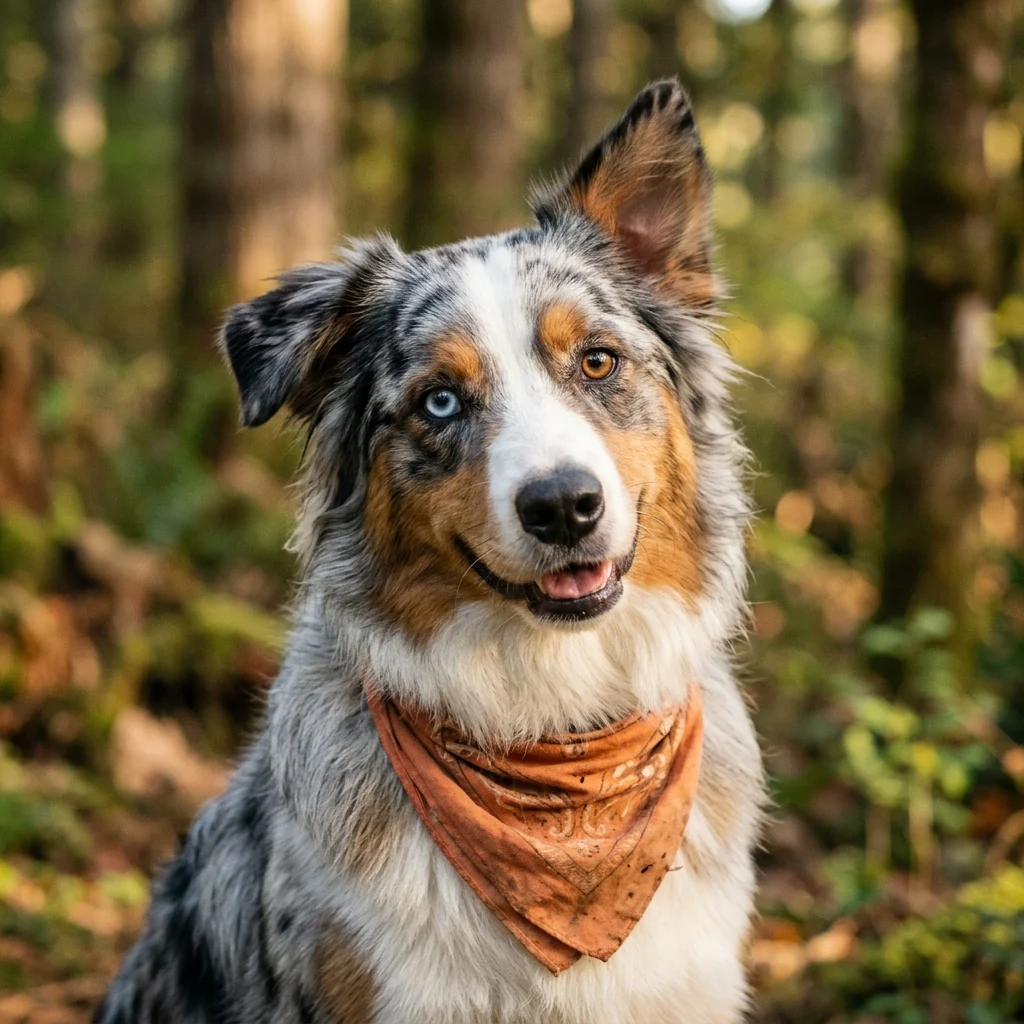
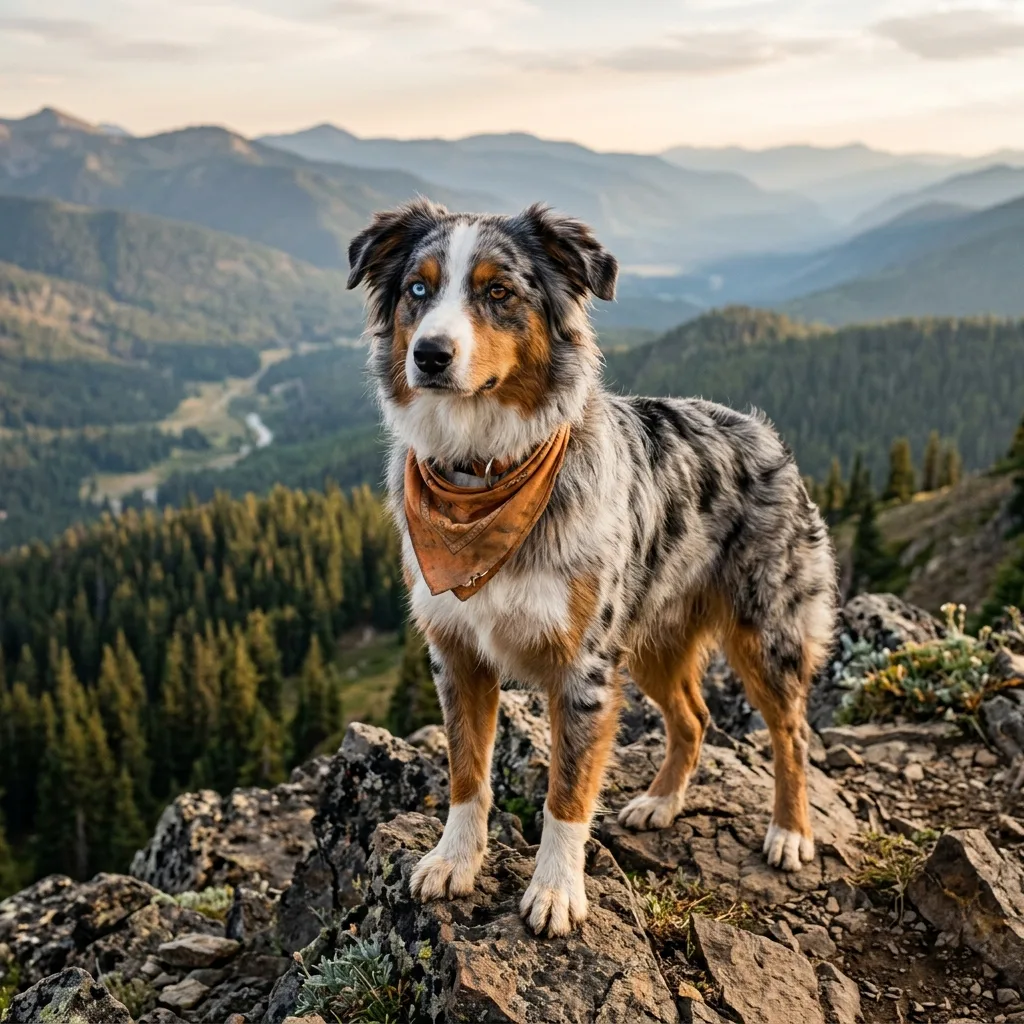
All-day drive: Border Collie, Australian Shepherd, Australian Cattle Dog
Border Collie: 19–22 in · 30–55 lb · 12–15 years Aussie: 20–23 in · 50–65 lb · 12–15 years ACD: 18–20 in · 35–50 lb · 12–16 years
The engines. All three are light enough to handle heat better than the giants, athletic enough for any terrain, and long-lived — the Cattle Dog’s 12–16 years is the best on this list.
The catch is mental, not physical. The AKC is refreshingly blunt about the Border Collie: this is a breed for an active owner, not for someone who prefers to stay indoors. The Cattle Dog needs a job, not just a walk. Tire the body and the mind stays busy; these breeds do not switch off just because you are tired.
For the Aussie, the same maturity rule as the Vizsla applies — the AKC frames it as a great running companion once the skeletal system is fully formed.
Warm and dry climates: Rhodesian Ridgeback
25–27 in · 85 lb · 10–12 years
Developed in southern Africa, the Ridgeback is the sensible pick if your hiking is hot and dry. The AKC describes its exercise needs as moderate — strong and athletic, loves to run, but adaptable rather than relentless. A good middle ground for owners who want a substantial dog without a herding breed’s demands.
Working and protective: German Shepherd & Belgian Malinois
GSD: 24–26 in · 65–90 lb · 12–14 years Malinois: 24–26 in · 60–80 lb · 14–16 years
Both are superb athletes. Both need a genuinely experienced handler, and neither is a casual choice. The GSD’s health list includes degenerative myelopathy alongside hip and elbow dysplasia and bloat risk — our full German Shepherd adventure guide covers the DNA test for it that every buyer should ask about. The Malinois needs, in the AKC’s words, exercise “and plenty of it” — and it is one of the longest-lived breeds here at 14–16 years.
The off-leash reality check
This is the section other lists skip, and it might be the most practically useful one here. These are not our opinions — they are the AKC’s own words about its own breeds.
- Siberian Husky: it is “vital to keep the dog on a leash, in harness, or in a fenced yard at all times.”
- German Shepherd: “do not let the dog off leash, as even the best-trained dog can become distracted.”
- Samoyed: the breed has a strong urge to roam, and “if loose a Sammie might travel for miles.”
If you have your heart set on a Husky and a picture of it running free on a ridge, adjust the picture. For these breeds, a long-line and a tracker are the plan, not an admission of failure.
Check Tractive GPS on Amazon →
Choose the tracker for your terrain, not the ad copy — cellular trackers go dark without signal, which is exactly where you need them. Our GPS tracker guide explains the difference honestly, and our long-line guide covers building real recall before you ever trust it.
The breeds that should not be on this list
Being honest about this matters more than adding two more names.
Flat-faced breeds — Bulldogs, French Bulldogs, Pugs. The data is not subtle. Bulldogs showed 13.9× a Labrador’s odds of heat-related illness and French Bulldogs 6.5×. Around half of pugs, French bulldogs and bulldogs assessed in one UK study were affected by brachycephalic obstructive airway syndrome (BOAS), which reduces the airway’s capacity for evaporative cooling. Critically, brachycephalic dogs are more vulnerable even at relatively low temperatures and relatively low activity levels — you cannot simply hike slowly and call it safe. These dogs deserve short, cool, shaded walks, and there is no shame in that being the whole plan.
Great Pyrenees — and this one may surprise you. It looks like the ultimate mountain dog and it appears on plenty of hiking lists. But the AKC states plainly that Pyrs are not a highly active breed. They were developed as livestock guardians that patrol territory and conserve energy for defending the flock. Moderate walks suit them. Putting one on a backpacking list is a misunderstanding of what the breed is for.
Before you choose: the honest questions
- What is your actual weather? Not your aspirational weather. If you hike in summer heat, weight and muzzle length matter more than energy level.
- How old will the dog be? Growth plates close somewhere around 18–24 months in the medium and large breeds here. Distance work waits.
- Do you want a dog that switches off? Herding breeds generally do not, without a job.
- Are you honest about recall? If not, pick a biddable breed and use a long-line anyway.
Whatever you choose, a well-fitted harness is the one piece of gear every dog on this list needs, and paw protection is worth having before you need it.
Check Ruffwear Front Range on Amazon →
New to all of this? Start with our beginner’s guide to hiking with your dog, then work through the dog camping checklist before the first overnight.
The bottom line
If you want one breed and one answer: the Labrador Retriever, for the reasons the data quietly makes obvious.
If you hike far and fast, look at the German Shorthaired Pointer or Vizsla. If you live where it snows, the northern breeds are unbeatable — and must be leashed. If your days are long and mental as much as physical, the herding trio will outlast you. If your adventures are on water, the Chesapeake; around camp and cool mountains, the Berner.
And whichever dog is already lying at your feet: the breed matters much less than the shade you find, the water you carry, and the honesty you bring to what your dog can actually do today.
Sources
- Hall EJ, Carter AJ, O’Neill DG. Incidence and risk factors for heat-related illness (heatstroke) in UK dogs under primary veterinary care in 2016. Scientific Reports (2020)
- Liu N-C, et al. Conformational risk factors of brachycephalic obstructive airway syndrome (BOAS) in pugs, French bulldogs, and bulldogs. PLOS One (2017)
- The effect of surgical treatment of BOAS on the thermoregulatory response to exercise in French bulldogs (2023)
- Compensatory load redistribution in Labrador retrievers when carrying different weights. BMC Veterinary Research (2016)
- American Kennel Club — Reasons Why Northern Breeds Rock Cold Weather
- American Kennel Club — Labrador Retriever breed profile
- American Kennel Club — German Shorthaired Pointer breed profile
- American Kennel Club — Vizsla breed profile
- American Kennel Club — Siberian Husky breed profile
- American Kennel Club — Alaskan Malamute breed profile
- American Kennel Club — Samoyed breed profile
- American Kennel Club — Bernese Mountain Dog breed profile
- American Kennel Club — Newfoundland breed profile
- American Kennel Club — Chesapeake Bay Retriever breed profile
- American Kennel Club — Border Collie breed profile
- American Kennel Club — Australian Shepherd breed profile
- American Kennel Club — Australian Cattle Dog breed profile
- American Kennel Club — Rhodesian Ridgeback breed profile
- American Kennel Club — German Shepherd Dog breed profile
- American Kennel Club — Belgian Malinois breed profile
- American Kennel Club — Great Pyrenees breed profile
- American Kennel Club — Golden Retriever breed profile
Frequently asked questions
What is the best all-around dog breed for hiking?
The Labrador Retriever is the safest default. It is built for long days of work, it is biddable enough to be trusted around other trail users, and in the largest study of heat-related illness in dogs to date it was used as the baseline breed that others were measured against — meaning most popular breeds carry equal or higher heat risk than a Lab. If you want one breed that handles day hikes, water, camping and a family, it is very hard to beat.
Are Golden Retrievers good hiking dogs?
They are willing and athletic, but there is a caveat almost no list mentions. In a study of 905,543 UK dogs, Golden Retrievers had 2.65 times the odds of heat-related illness compared with Labrador Retrievers. That does not make them a bad trail dog — it means a Golden needs earlier starts, more shade and more water discipline than owners assume. The AKC also recommends talking to your vet before starting strenuous, high-impact activity with a Golden.
Which dog breeds should not go hiking?
Flat-faced (brachycephalic) breeds are the clear answer: Bulldogs, French Bulldogs and Pugs. Their airway conformation reduces the surface area available for evaporative cooling, and research shows brachycephalic dogs are roughly 2.1 times more susceptible to heat-related illness even at relatively low temperatures and relatively low activity levels. Bulldogs showed nearly 14 times a Labrador's odds. Short, cool, shaded walks only.
At what age can a dog start hiking long distances?
Not as a puppy. Growing dogs have open growth plates, and the AKC advises that Vizslas should not run long distances until they reach maturity at roughly 18 to 24 months, and that an Australian Shepherd makes a good running companion only once the skeletal system is fully formed. Short, flat, self-paced outings are fine early on — sustained distance and hard descents should wait. Ask your vet about your individual dog.
Can you hike off-leash with a Siberian Husky?
The AKC's own guidance for the breed is unusually blunt: it is vital to keep a Siberian on a leash, in harness, or in a fenced yard at all times. The breed was built to run and will take the opportunity. Samoyeds carry a similar warning — the AKC notes a loose Sammie may travel for miles. For these breeds a long-line and a GPS tracker are not accessories, they are the plan.
What is the best dog breed for camping specifically?
Camping rewards a different trait than hiking: the ability to settle. Breeds that were bred to work alongside people at a steady pace — the Labrador, the Bernese Mountain Dog and the Newfoundland among them — tend to switch off at camp more easily than high-drive herding breeds, who often need a job before they can relax. A Border Collie can absolutely camp, but plan on tiring the mind as well as the legs.
Comments
Got a question, a tip, or a correction? Leave a comment — no account, no sign-in. Just your name and your thoughts.
Loading comments…