Almost every piece of dog gear is sold on plausibility. A cooling vest looks like it should work, so people buy it, and reviews describe how the dog seemed happier.
Cooling vests are one of the rare exceptions. There is an actual peer-reviewed study that put thermometers in working dogs, ran them in the heat with and without vests, and measured what happened. That is unusual enough to be worth taking seriously — and the results are more nuanced than either the marketing or the sceptics suggest.
What the research measured
The study, published in Animals in 2022 by Benito, Lozano and Miró, worked with 13 military working dogs — nine German Shepherds and four Belgian Malinois, aged two to six — in Valencia, Spain, in August.
The conditions were realistic rather than extreme:
- Ambient temperature 27.8–31°C
- Relative humidity 46–53%
- Exercise: 20 minutes of running at roughly 10 km/h
Each dog ran the same protocol in three conditions: no vest, a phase-change material (PCM) vest using pre-cooled rigid inserts over the front of the trunk, and an evaporative vest — a three-layer moisture-holding design covering the whole trunk.
What it found
Core body temperature at the finish line, and fifteen minutes later:
| Condition | At finish | 15 min after |
|---|---|---|
| No vest | 41.22°C | 40.59°C |
| PCM vest | 40.82°C | 40.10°C |
| Evaporative vest | 40.59°C | 39.82°C |
The evaporative vest finished 0.62°C cooler than no vest at all, and the gap actually widened during recovery to 0.77°C.
Heart rate followed the same pattern — dogs with no vest peaked at 123.4 bpm at the finish, and the statistically significant differences appeared for the evaporative vest during the recovery phases.
The authors’ conclusion was that evaporative cooling vests showed the best result, and that they are worth using during exercise to help prevent fatigue and heat exhaustion.
Two honest caveats they raised themselves: the sample was small at 13 dogs, and the study ran for only three days. This is good evidence, not a definitive one.
The limitation that matters most
This is the single most important sentence in this article, and it comes straight from the researchers:
Cooling vests are not indicated for the treatment of heat stroke.
They are a preventive tool for moderate conditions. A dog that is already in trouble — frantic panting that won’t settle, brick-red or very pale gums, wobbliness, vomiting — needs cooling and a veterinarian immediately, not a garment.
That distinction matters because heat illness is genuinely dangerous. In the largest study of the problem, covering 905,543 dogs, the case fatality rate for heat-related illness was 14.18%.
Why humidity changes everything
Evaporative vests work by exploiting the physics of a phase change: water absorbing heat from your dog’s body as it turns to vapour. Anything that slows evaporation slows the cooling.
Humidity is that thing. In dry heat, an evaporative vest performs at its best. In humid heat, evaporation stalls, the vest stays saturated, and what you have strapped to your dog is a warm, heavy layer doing very little.
The study was run at 46–53% relative humidity — moderate. If you live somewhere genuinely humid, temper your expectations, and put your effort into timing and shade instead.
The three types, and which the research favoured
Not all “cooling vests” work the same way, and the differences are practical.
Evaporative. Multi-layer fabric that holds water; cooling comes from evaporation off the surface. The vest tested in the military working dog study was a three-layer design covering the whole trunk, weighing 780 g dry. This is the type the research favoured, and the type both recommendations below use.
Phase-change material (PCM). Rigid inserts pre-cooled to a set temperature, sitting against the front of the trunk. In the study, the PCM vest weighed 1,270 g — over 60% heavier than the evaporative one — and covered less of the dog. It still beat wearing nothing (40.82°C at the finish versus 41.22°C), but it trailed the evaporative vest at every measurement point.
Ice-pack vests. Frozen inserts in pockets. Not represented in the study. The obvious appeal is intense initial cooling; the obvious limits are weight, a short working window, and very localised contact.
The pattern worth taking away: coverage and lightness beat intensity. The lighter vest covering the whole trunk outperformed the heavier one delivering colder contact over a smaller area.
Getting the fit right
A cooling vest is a garment your dog wears while working, so fit is not cosmetic.
Measure, don’t guess. Chest girth is usually the deciding dimension, and it is the one people estimate wrong. Measure around the widest part of the ribcage behind the front legs.
Coverage matters. The evidence points toward whole-trunk coverage. A vest that only reaches mid-back leaves a lot of dog uncooled.
Check it against the harness. If your dog wears a harness on trail, put both on together at home. Bunched fabric under a load-bearing strap causes rubbing on long days.
Watch for shifting. Independent testing flagged this specifically on the Swamp Cooler — vests that rotate when a dog runs end up cooling the air instead of the dog.
Remember the wet weight. A saturated vest is noticeably heavier than a dry one. For a small dog, or an older dog, that added load is worth factoring in.
When a vest is not enough
Because vests prevent rather than treat, it is worth knowing what actually cools a dog in trouble — and the standard advice most owners have absorbed is out of date.
The Royal Veterinary College’s guidance is “cool first, transport second.” They note that widespread advice to cool “slowly” with “tepid but not cold water” persists despite no substantial evidence supporting it. Their recommended first aid: move the dog somewhere cool or use a fan, offer small sips of water without forcing, and either use cold water immersion (effective for young, healthy dogs) or the evaporation method — pouring water cooler than the dog over them combined with air movement — then seek veterinary advice immediately.
Research at the University of Pennsylvania’s Working Dog Center makes the case for acting rather than waiting. Comparing partial water immersion in a 22°C pool against isopropyl alcohol on the paw pads against simple rest, immersion cooled dogs fastest — and dogs left to cool passively actually finished slightly hotter than they started after a 20-minute rest.
The uncomfortable statistic: in a VetCompass study of 945,543 dogs, only 21.7% of dogs presenting with heat-related illness had been actively cooled before transport to the vet.
A cooling vest is part of the prevention layer. Water, air movement and a phone are the emergency layer. Know both.
The vests worth considering
An honest note before the recommendations: independent testing by Treeline Review rated the Non-stop Dogwear vest best overall and Back on Track’s Cool on Track as the strongest budget option — but neither is readily available on Amazon in the US. We are not going to pretend otherwise to make a list look complete. Here is what you can actually buy through Amazon, and how it performed.
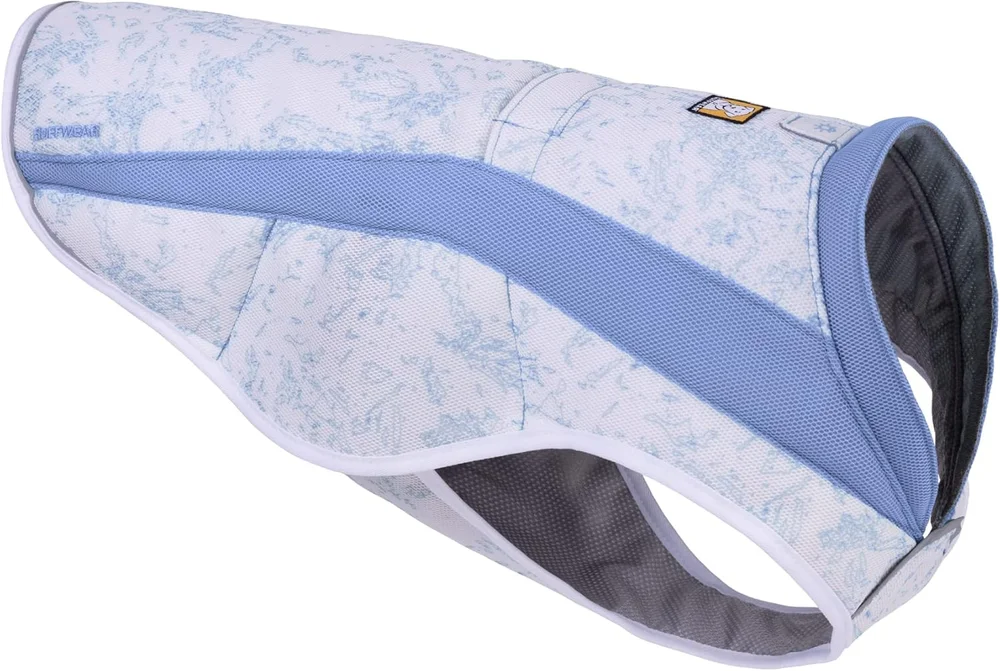
Ruffwear Swamp Cooler — the tested pick you can actually get
In Treeline Review’s controlled testing — measuring surface temperature drop within three minutes in direct sun above 32°C — the Swamp Cooler placed second overall and was named their best option for large dogs, lowering surface temperature by more than 44°C (80°F) in three minutes.
Its design does two things at once: the outer layer is UPF 50+ rated to reflect heat, while the inner layers hold water against the dog. The back coverage is generous, which suits longer-bodied dogs.
The honest drawbacks from that same testing: it tends to shift when a dog runs or plays, and it feels heavy once fully saturated.
Check Ruffwear Swamp Cooler on Amazon →
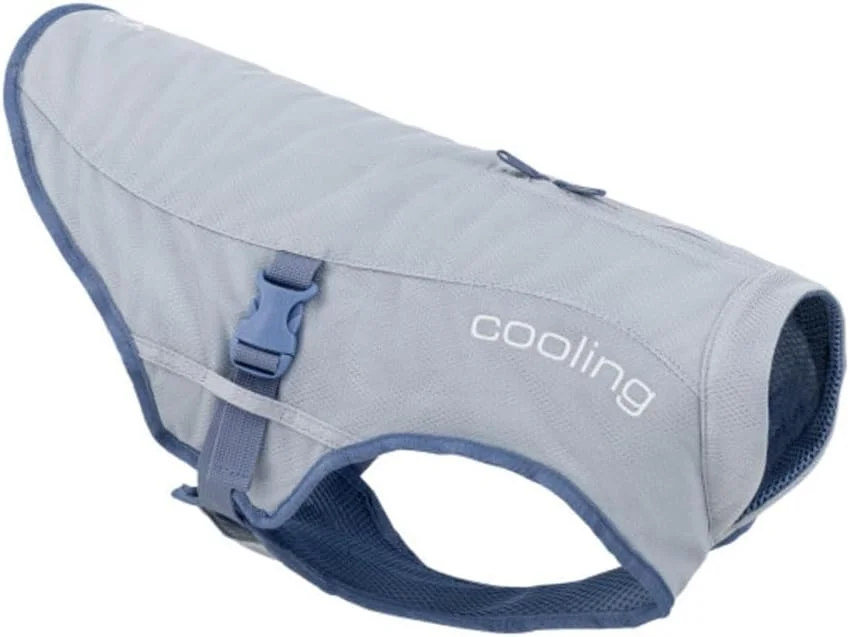
Kurgo Core Cooling Vest — the harness-friendly alternative
The Kurgo Core uses the same evaporative principle with a design detail that solves a real irritation: a two-way zipper giving access to the harness and collar without removing the vest. If you clip and unclip a lot — trailhead, car, water crossing — that matters more than it sounds.
Check Kurgo Core Cooling Vest on Amazon →
How to actually use one
Most disappointment with cooling vests comes from using them wrong.
Soak it properly, then wring it out. Damp, not dripping. A vest that is merely sprinkled dries in minutes and does nothing.
Put it on before your dog is hot. These are preventive. Fitting one to an already-overheating dog is treating the wrong problem at the wrong time.
Re-wet on a schedule, not on a hunch. As soon as it dries it stops working and becomes insulation. Carry enough water to re-wet, and note that this is water in addition to what your dog drinks.
Check it against the harness. Layers that bunch under a harness cause rubbing on long days.
Don’t let it replace the basics. Shade, timing and water do more than any vest. The vest buys margin; it does not buy permission.
Who benefits most
Dogs whose own cooling system is already compromised — and the data is specific about who those are.
Relative to a Labrador Retriever, the odds of heat-related illness were:
- Bulldog — 13.95×
- French Bulldog — 6.49×
- Pug — 3.24×
- Golden Retriever — 2.65×
Plus two structural factors: brachycephalic skull shape at 2.10×, and bodyweight over 50 kg at 3.42×.
For flat-faced dogs in particular, a vest is not a solution. Research on brachycephalic obstructive airway syndrome found these breeds are more susceptible to heat illness even at relatively low temperatures and relatively low activity levels. The honest advice for a Bulldog in summer is a shorter, cooler, shadier walk — with or without a vest.
Our adventure breeds guide covers which breeds handle heat well and which need a fundamentally different plan.
Where a vest fits in the wider kit
A cooling vest handles one part of the problem — the dog’s body while it is moving. Three other things matter as much or more:
The ground. Surfaces run far hotter than air, and paw burns happen in seconds rather than minutes. Our guide to how hot is too hot to walk your dog has the numbers and the seven-second test, and our pavement temperature tool estimates the surface temperature for today.
The paws. Where you cannot avoid hot or abrasive ground, boots are the direct answer — conditioned in advance, not first used at the trailhead.
The water. More than you think, offered before your dog asks. Wetting the belly, groin and paws is genuinely effective cooling and costs nothing.
For the full picture, our guide on keeping your dog cool and safe on summer hikes pulls the whole plan together.
The bottom line
Cooling vests are one of the few pieces of dog gear with real measured evidence behind them — a 0.62°C lower core temperature at the finish and 0.77°C lower in recovery is a meaningful margin when you are working a dog in the heat.
They are also narrower than the marketing suggests. They prevent, they do not treat. They work best in dry heat. And they help least for the flat-faced breeds that need help most.
If you hike in dry summer heat with a healthy, normal-muzzled dog, the Ruffwear Swamp Cooler is the tested option you can buy today, and the Kurgo Core is a sensible alternative if harness access matters to you.
And if your honest answer is that it is simply too hot — that is a legitimate plan too. The best cooling strategy has always been the 6am walk.
Sources
- Benito M, Lozano D, Miró F. Clinical Evaluation of Exercise-Induced Physiological Changes in Military Working Dogs (MWDs) Resulting from the Use or Non-Use of Cooling Vests during Training in Moderately Hot Environments. Animals (2022)
- A Randomized Cross-Over Study Comparing Cooling Methods for Exercise-Induced Hyperthermia in Working Dogs in Training
- Hall EJ, Carter AJ, O’Neill DG. Incidence and risk factors for heat-related illness (heatstroke) in UK dogs under primary veterinary care in 2016. Scientific Reports (2020)
- Liu N-C, et al. Conformational risk factors of brachycephalic obstructive airway syndrome (BOAS) in pugs, French bulldogs, and bulldogs. PLOS One (2017)
- Treeline Review — Best Dog Cooling Vests (tested)
- Royal Veterinary College — The RVC urges owners of hot dogs to “cool first, transport second”
- Royal Veterinary College — Heatstroke in dogs and cats: prevention, symptoms and first aid
- Washington State University College of Veterinary Medicine — Protect your pet’s feet from heat, burns
Frequently asked questions
Do dog cooling vests actually work?
Yes, with measurable evidence behind them. In a study of 13 military working dogs exercising in 28–31°C heat, dogs finished 0.62°C cooler wearing an evaporative cooling vest than wearing nothing, and were 0.77°C cooler fifteen minutes after exercise. The researchers concluded evaporative vests showed the best result of the options tested and recommended them during exercise to help prevent heat exhaustion.
Can a cooling vest treat heatstroke?
No, and this matters more than any product recommendation. The researchers behind the main cooling vest study were explicit that vests are not indicated for the treatment of heat stroke — they are a preventive measure for moderate conditions. A dog showing signs of heat illness needs immediate veterinary attention, not a vest.
Do cooling vests work in humid weather?
Much less well. Evaporative vests cool by letting water evaporate off the fabric, and evaporation slows dramatically as humidity rises — the vest simply stays wet without shedding heat. In humid climates a wet vest can become a warm, heavy layer. The main study was run at 46–53% relative humidity, which is moderate, not tropical.
How do you use a dog cooling vest properly?
Soak it thoroughly, wring it out so it is damp rather than dripping, and put it on before your dog gets hot rather than after. Re-wet it whenever it dries — a dry vest is just an extra layer working against you. Check the fit does not interfere with the harness, and keep offering water regardless.
Which dogs benefit most from a cooling vest?
Dogs whose own cooling system is compromised. In a study of 905,543 dogs, flat-faced breeds carried far higher odds of heat-related illness — Bulldogs nearly 14 times a Labrador's, French Bulldogs about 6.5 times — and dogs over 50 kg carried 3.42 times the odds. Older and overweight dogs were also at elevated risk. For those dogs, cooler timing and shorter outings matter even more than gear.
Is a cooling vest better than a cooling mat or just water?
They do different jobs. A vest works while the dog is moving, which is when heat is generated. A mat works at rest, at camp or at home. Plain water on the belly, groin and paws is genuinely effective and free. The most reliable plan is not a single product — it is walking earlier, finding shade and carrying more water than you think you need.
Comments
Got a question, a tip, or a correction? Leave a comment — no account, no sign-in. Just your name and your thoughts.
Loading comments…