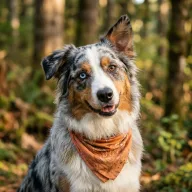
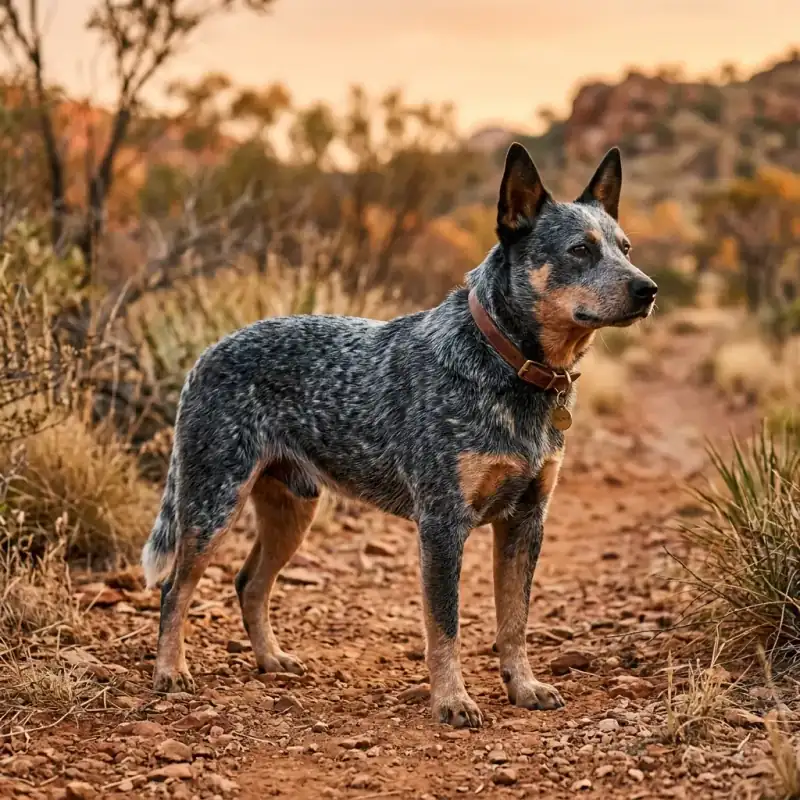
Somewhere in Victoria, Australia, an Australian Cattle Dog named Bluey worked cattle and sheep for about twenty years, retired, and kept going, all the way to 29 years and 5 months, a record for the oldest dog ever reliably documented that still stands. Bluey is an extreme outlier, but the legend is fitting, because if you had to name the toughest, hardiest, most durable working dog in the world, the Australian Cattle Dog would be on a very short list. This is a breed built to work brutal country in punishing heat and simply not quit.
That toughness is the breed’s glory and, for an unprepared owner, its trap. The same relentless engine that lets a Cattle Dog work all day and live for a small eternity does not idle quietly in a suburban living room. And the specific instinct at the heart of its job, moving cattle by biting their heels, comes home with the dog and looks for something to herd. This guide covers what makes the Blue Heeler a magnificent adventure companion, and the two honest realities every prospective owner needs: the drive behind the durability, and the bite behind the “Heeler.”
Australian Cattle Dog at a glance
| Height | 18–20 in (males), 17–19 in (females) |
| Weight | 35–50 lb |
| Life expectancy | 12–16 years |
| Coat | Short, dense, weather-resistant double coat |
| Shedding | Moderate year-round, with seasonal blows |
| Energy | Extreme; a hard-working stock dog that needs a job |
| Adventure verdict | One of the toughest, most tireless trail dogs alive — for an experienced, active owner who can employ it |
Heights, weights, life expectancy and health flags come from the official AKC breed standard. Our verdict: pound for pound, the Australian Cattle Dog is one of the hardiest and most capable adventure dogs there is: compact, sound, weatherproof, and seemingly tireless, with a long working life ahead of it. But it is also one of the most demanding, with a herding bite and an intensity that reward experienced, active owners and overwhelm casual ones. This is a serious working breed in a medium-sized package.
The dog behind the reputation
The Australian Cattle Dog was developed in 19th-century Australia to do a job that broke other breeds: droving half-wild cattle across vast, harsh distances in extreme heat. Settlers needed a dog with the stamina, toughness and independence to work cattle for days on end, and the breed’s development is generally credited to crossing imported herding dogs with the native Australian Dingo, a heritage that shows in the breed’s hardiness, its resourcefulness, and its slightly wild, self-reliant streak.
That origin explains the temperament exactly. The Cattle Dog is intensely energetic, highly intelligent, and built to work independently and make its own decisions: it is not a soft, biddable follower but a driven, self-directed partner. It bonds hard, often to one person, and it is naturally alert and wary of strangers, a legacy of guarding stock and property. And it carries the herding instinct in its most physical form: the heel-nip that gives the “Heeler” its name. None of this is a flaw; it is a superb stock dog being itself. The question is whether your life can absorb it.
Blue Heeler, Red Heeler, Queensland Heeler: one dog, many names
New owners are often baffled by the pile of names, so here is the plain version: they are all the same breed. “Australian Cattle Dog” is the official name; “Blue Heeler” and “Red Heeler” simply describe the two colours the breed comes in, blue (a blue-grey mottled or speckled coat) and red (an even red speckle), which are cosmetic variations, not different types or temperaments. “Queensland Heeler” is just a regional nickname for the same dog. A charming quirk: puppies of both colours are born almost white and develop their adult colouring over their first weeks, a trait inherited from the breed’s mixed ancestry. The practical upshot for a buyer is simple: if you are comparing a “Blue Heeler” from one breeder with an “Australian Cattle Dog” from another, you are comparing the same breed under two labels. Judge the breeder and the individual puppy, not the name on the advert.
The engine behind the longevity: drive that never quits
It is tempting to read the breed’s famous longevity as a sign of an easy-going constitution. It is the opposite. The Australian Cattle Dog lives long because it is built tough and driven, and that drive is the thing you actually have to live with every single day of those many years.
The AKC does not mince words: this breed “needs more than just a quick walk.” It wants daily runs and real work, and it means it. In practice a Cattle Dog needs one to two hours of hard physical exercise combined with serious mental engagement, because, like its fellow herders the Australian Shepherd and Border Collie, a physically tired Cattle Dog with an idle mind is only half-satisfied, and the unspent half goes into trouble. The outlets that suit the breed:
- Physical: trail running, long hikes, biking alongside, swimming. The breed’s soundness and stamina are extraordinary, and it will happily do a full day out.
- Mental and vocational: herding, agility, obedience, scent work, and demanding trick training. A Cattle Dog wants a job, and giving it one is the single best thing you can do for its behaviour.
Skimp on either channel and the same engine that powers a 29-year working life powers destruction, obsessive behaviour, excessive barking and nuisance nipping instead. If you want to scale the physical side sensibly for your dog’s age and fitness, our guide to how much exercise a dog really needs helps, but for this breed, remember the mental half is not optional.
The “Heeler” bite: the instinct that comes home
The breed-defining behaviour that catches new owners off guard is right there in the name. The Australian Cattle Dog moves livestock by darting in and nipping at their heels, a bold, physical herding style suited to shifting stubborn, half-wild cattle. That instinct does not stay in the cattle yard. It comes home, and in the absence of actual stock it latches onto the moving things in your household: running children, joggers, cyclists, other pets, and your own ankles.
It is critical to understand what this is and is not. It is not aggression; it is a herding dog doing precisely what it was bred to do, on the wrong targets. But left unaddressed it becomes a genuine problem, especially around young children who run and shriek in exactly the way that triggers it. Managing it is a core part of Cattle Dog ownership:
- Train and socialise early, so the dog learns what is and isn’t appropriate to herd from the start.
- Redirect the drive onto legitimate outlets (herding, fetch, tug, flirt poles, structured games) so the instinct has somewhere to go.
- Never let heel-nipping become a game. What looks like harmless play in a puppy is a rehearsal for a habit you do not want in a strong, driven adult.
- Supervise around children and visitors until the behaviour is reliably under control.
Handled from day one, most Cattle Dogs learn the difference well. Ignored, the bite is the single most common reason the breed gets into trouble with families.
Trainability: brilliant, independent, and not for the hands-off
Australian Cattle Dogs are highly intelligent and immensely capable: they shine in herding, agility, obedience and virtually any dog sport. But “smart” does not mean “easy” here. This is an independent, strong-willed breed that will happily take charge if an owner is inconsistent, and it can be pushy or dominant without clear, fair leadership. It respects structure and rewards a handler who trains seriously; it walks all over a passive one.
For an adventure dog, prioritise:
- Reliable recall. The prey and herding drives are strong, and a Cattle Dog can lock onto livestock, wildlife or a moving target. Build recall on a long-line before trusting it off-leash near stock or roads.
Disclosure: some links below are affiliate links. If you buy through them we may earn a small commission at no extra cost to you.
Check Long-Line Leashes on Amazon →
- Bite and impulse control, per the section above; non-negotiable for this breed.
- A trained “enough” for the barking and the herding, so the dog can switch off on cue.
Toys, play and gear that fit an Australian Cattle Dog
Cattle Dogs play as hard as they work. Tug, fetch, flirt poles and puzzle feeders all channel the drive productively, and the breed’s problem-solving mind eats up trick training and scent games (mind a young dog’s joints with high-impact games until it matures). On gear, the compact, athletic, sturdy build is easy to outfit:
- A well-fitted harness for running, hiking and control work, with no throat pressure and better steering. The Ruffwear Front Range suits the breed’s medium build.
Check Ruffwear Front Range on Amazon →
- Sun and heat sense. The breed is famously heat-tough, but tough is not invincible: carry water, watch the pace on hot days, and check hot ground; our guide to how hot is too hot to walk your dog has the thresholds.
For anyone buying for someone else’s Heeler: this is a dense, muscular dog that weighs more than it looks, and the 35–50 lb range means chest sizing genuinely varies. Our gift guide for adventure dog owners covers what you can safely give without a tape measure.
Health and lifespan
Australian Cattle Dogs are genuinely one of the hardier, longer-lived breeds, at 12 to 16 years, and, as Bluey’s record shows, occasionally far beyond. Responsible breeders still screen, and the breed has a few specific concerns to ask about:
- Deafness — congenital hearing loss occurs in the breed (linked to its coat-colour genetics); reputable breeders test puppies’ hearing.
- Progressive retinal atrophy (PRA) and other eye conditions — a good breeder health-tests eyes; DNA tests exist for some forms.
- Hip dysplasia — the standard orthopaedic screen; ask for the parents’ scores.
That long potential lifespan cuts both ways, as with the Malinois: a Cattle Dog is a decade-and-a-half-plus commitment to a high-drive working dog, so go in planning for the long haul.
None of this is a diagnosis. It is the honest health picture of the breed — screen through a good breeder and manage your individual dog with your vet.
Grooming and shedding
The Cattle Dog’s short, dense, weather-resistant double coat is low-maintenance and superbly practical: a weekly brush most of the year keeps it healthy, stepped up during the seasonal sheds when the undercoat blows out over a few weeks. The coat is naturally dirt- and water-resistant, so the breed cleans up quickly after muddy, wet trail days, one of the many ways this dog is built for hard outdoor use. As with other double coats, do not shave it; it protects against both heat and cold.
Is an Australian Cattle Dog right for you?
Weigh four questions honestly before you decide:
- Can you give it a job, every day, for its long life? Hard physical exercise plus real mental work. A Cattle Dog without a job is a destructive, nippy, noisy dog, for fifteen years or more.
- Can you manage the heel-nipping? Especially around children. This takes early, consistent training and honest supervision.
- Are you a firm, fair, hands-on trainer? This independent, strong-willed breed needs clear leadership and walks over a passive owner.
- Do you want a driven working partner, not a laid-back pet? The Cattle Dog’s intensity and loyalty are the whole point, but they are a great deal of dog in a compact frame.
Say yes to all four and few dogs will repay you like a Cattle Dog: a compact powerhouse that shrugs off weather which stops other breeds and, with luck, stays at your side for an extraordinarily long run. Say no to any of them, and that same relentless drive will find you out.
The Cattle Dog’s fellow herders make the natural comparisons: the Australian Shepherd, a touch softer and more biddable for many owners, and the Border Collie, even more intensely work-driven. For the whole field measured against the veterinary evidence, see our hub guide, The Best Adventure Dog Breeds for Hiking & Camping.
Sources
- American Kennel Club — Australian Cattle Dog breed profile
- Guinness World Records / Bluey — oldest dog ever verified (29 years, 5 months)
- Australian Cattle Dog breed overview — temperament and heeling instinct (Orvis)
Frequently asked questions
How long do Australian Cattle Dogs live?
A long time: the AKC gives 12 to 16 years, and the breed is famous for its longevity. The most celebrated example is Bluey, an Australian Cattle Dog who held the Guinness World Record as the oldest dog ever reliably verified, living 29 years and 5 months after working stock for around two decades. Bluey is an outlier, not a promise, but the breed's reputation for a long, hardy, working life is well earned. A survey of the breed's longevity found an average of around 13 years.
Why does my Australian Cattle Dog nip at heels?
Because that is literally its job. The Australian Cattle Dog, the 'Heeler', was bred to move stubborn cattle by darting in and nipping at their heels, and that instinct comes home with the dog. Without an outlet and clear training, a Heeler will apply it to the moving things in your life: running children, joggers, cyclists, other pets, even your ankles. It is not aggression; it is a herding dog herding. The fix is early training, redirection onto appropriate outlets, and never letting the behaviour become a game.
How much exercise does an Australian Cattle Dog need?
A great deal, and it must include a job for the mind. The AKC is clear the breed 'needs more than just a quick walk'; it wants daily runs and real work. Plan on one to two hours of hard physical exercise combined with serious mental engagement: training, herding, agility, scent work, or a demanding hiking and running routine. This is one of the most driven breeds there is, and an under-worked Cattle Dog channels that formidable energy into destruction, obsessive behaviour and nuisance nipping.
Are Australian Cattle Dogs good family pets?
They can be devoted family dogs in an active, experienced home, but with real caveats. The heel-nipping instinct and a tendency to bond intensely with one person, plus natural wariness of strangers, mean they need early socialisation and careful management around young children and visitors. In a household that gives the dog a job and firm, fair training, a Cattle Dog is a loyal, protective, tireless companion. In a sedentary home, or one expecting a laid-back pet, it will be a frustrated handful.
Are Australian Cattle Dogs easy to train?
They are highly intelligent and very capable, but not always easy: they are independent, strong-willed and can be pushy or dominant without clear leadership. They learn quickly and excel at dog sports, herding and obedience when the training is consistent, fair and interesting to them, but they will test boundaries and take charge if an owner is inconsistent. This is a breed for someone prepared to train seriously and set firm, kind structure, not for a hands-off owner.
Do Australian Cattle Dogs bark a lot?
They can be vocal, particularly as watchdogs: the breed is naturally alert and protective and will sound off at people and activity around its territory. Combined with the herding drive, an under-stimulated Cattle Dog may bark and nip more than an owner would like. Meeting the breed's considerable exercise and mental-work needs, and training an 'enough' cue early, keeps the vocalising in reasonable bounds. A tired, employed Cattle Dog is a much quieter one.
Comments
Got a question, a tip, or a correction? Leave a comment — no account, no sign-in. Just your name and your thoughts.
Loading comments…