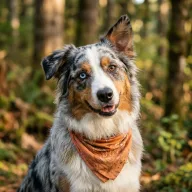
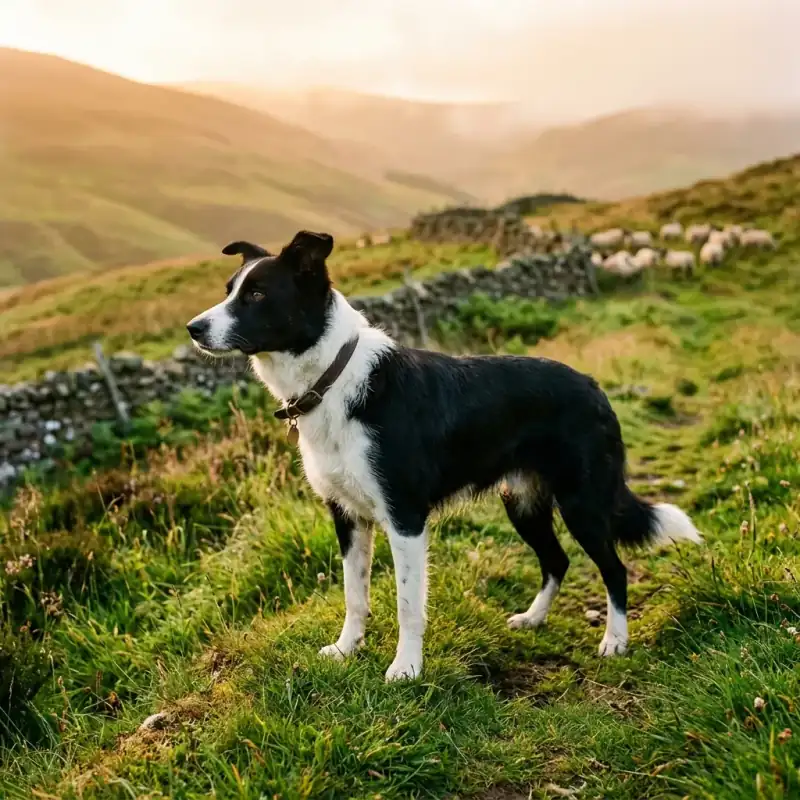
There is a reasonable argument that the Border Collie is the finest working dog ever bred, and an equally reasonable argument that it is the wrong dog for almost everyone who wants one. Both are true, and the gap between them is where a great many Border Collies end up in rescue.
This is the dog that tops every “smartest breed” list, the black-and-white blur that wins agility world championships, the animal that can be taught, quite literally, hundreds of words. It is magnificent. It is also relentless, sensitive, obsessive when under-worked, and utterly unsuited to a quiet life. The same intelligence that makes it so dazzling is precisely what makes it so demanding.
For the right owner, active and committed and ideally with a genuine job for the dog to do, nothing on four legs is a better trail and mountain partner. This guide covers exactly what that partnership requires, and it does not soften the two things a prospective owner most needs to hear: why the breed’s famous intelligence is a warning label as much as a boast, and a peer-reviewed collapse condition that strikes on precisely the hard, hot, high-drive days this dog was built for.
Border Collie at a glance
| Height | 19–22 in |
| Weight | 30–55 lb |
| Life expectancy | 12–15 years |
| Coat | Double coat, rough or smooth variety |
| Shedding | Moderate — year-round, plus seasonal blows |
| Energy | Extreme; a working dog with an off-switch you must install yourself |
| Adventure verdict | The ultimate athletic trail dog — for an owner who can genuinely keep up, body and brain |
Heights, weights, life expectancy and health flags come from the official AKC breed standard. Our verdict is emphatic in both directions: pound for pound, the Border Collie may be the most capable adventure dog there is: fast, agile, tireless, endlessly trainable, happy to hike from dawn to dusk. And it is the breed we would talk the most people out of, because the failure mode is not a slightly bored dog but a genuinely unhappy, destructive, sometimes neurotic one. This is not a dog you own casually.
The dog behind the reputation
The AKC’s practical summary of the breed is refreshingly honest: the Border Collie is “not for someone who prefers to stay indoors.” Read that as the understatement it is. This is a dog developed on the hills of the Anglo-Scottish border to work sheep all day using intelligence, stamina and an almost telepathic partnership with a shepherd, and every one of those traits is still fully loaded in the puppy you bring home.
The intelligence deserves its own section (below), but the temperament around it matters just as much. Border Collies are intensely bonded to their people and acutely sensitive to mood, tone and routine, and they read you constantly. That makes them extraordinary partners and also means they absorb household tension and inconsistency in a way tougher breeds shrug off. Many are reserved with strangers and can be sound-sensitive, so early, thorough socialisation is essential to raise a confident adult rather than a wary, reactive one.
Above all, this is a dog that needs to work. Not wants. Needs. The drive to gather, control and move is not a quirk you can train away; it is the core of the animal. Your job as an owner is not to suppress it but to give it somewhere to go.
The intelligence paradox: the smartest dog is not the easiest
The Border Collie’s intelligence is genuinely exceptional, and it is worth understanding properly, because most people file it under “pro” when it belongs, at least half, under “con.”
Two well-known data points anchor the reputation. The breed ranks first in psychologist Stanley Coren’s influential assessment of canine working and obedience intelligence, ahead of the Poodle and the German Shepherd. And in 2011, researchers John Pilley and Alliston Reid published a peer-reviewed study in Behavioural Processes documenting a Border Collie named Chaser who learned the proper-noun names of 1,022 individual objects, and could reliably retrieve each by name: evidence of a receptive vocabulary larger than any other non-human animal on record. That is the ceiling of what this breed’s mind can do.
Now the honest part. That cognitive horsepower does not come with an off-switch. A Border Collie’s brain is built to solve problems all day, and if you do not supply the problems, it will manufacture them: obsessively herding other pets, patrolling and barking, dismantling the house, or, in a genuinely common and telling failure mode, chasing shadows, lights and reflections, which in an under-stimulated dog can escalate into a compulsive disorder that is miserable to watch and hard to reverse.
The useful reframe is this: you are not adopting a pet so much as taking on a colleague who fully expects to clock in. A Border Collie with a job (real herding, agility, obedience, a demanding daily training and exercise routine) is a calm, fulfilled, astonishing animal. The identical dog with no job is anxious, destructive and frustrated, and no amount of love substitutes for the work. The intelligence everyone wants is the exact thing that makes the breed unforgiving of an under-committed home.
Exercise needs: body and brain, every day
Everything in the section above cashes out here. A Border Collie needs one to two hours of hard physical exercise a day (running, hiking, fetch, swimming, canicross), and, just as importantly, a comparable investment in mental exercise. The mistake that breaks so many Border Collie homes is assuming that a physically tired dog is a satisfied dog. It is not. Run a Border Collie for an hour with no mental work and you have built a fitter athlete with the same overactive mind and more endurance to cause trouble.
Feed both channels:
- Physical: trail hiking, off-leash running on safe ground, long fetch and disc sessions, swimming, dog sports. The breed’s stamina is close to bottomless — it will happily do a full mountain day.
- Mental: daily training (they thrive on it and learn frighteningly fast), puzzle and food-dispensing toys, scent and “find it” games, trick sequences, and above all a real outlet like herding or agility.
The payoff for getting this right is a dog that can genuinely switch off at home: the calm, folded-up Border Collie asleep by the fire that people imagine, which exists only on the far side of a properly met workload.
One firm rule for puppies, as with any athletic breed: hold off on hard distance running and repeated jumping until the growth plates close, around 18 to 24 months. Build the young dog’s fitness gradually and let the joints mature first. Our guide to how much exercise a dog really needs sets sensible loads by life stage, and if trail days are new to you, start with the beginner’s guide to hiking with your dog.
Border Collie Collapse: the condition every hard-running owner should know
If the intelligence paradox is the honest angle for daily life, this is the honest angle for the trail, and it is one almost no breed page mentions.
Border Collie Collapse (BCC) is a recognised, exercise-induced condition in which a dog that is completely normal at rest becomes affected after a short burst of strenuous, high-excitement activity. Typically 5 to 15 minutes into hard exercise, and more often in warm weather, an affected dog begins to lose focus and coordination: disorientation, a dazed or “dull” mentation, swaying and staggering, a choppy or exaggerated gait, dragging or crossing of the legs, sometimes falling to the side. The dog is not usually in pain, and the reassuring part is that it generally returns to normal within about 30 minutes of rest. Onset can appear anywhere from four months to seven years of age, most often around two.
Two things make this more than a curiosity. First, it is real and studied: researchers at the University of Minnesota’s Canine Genetics Lab, with collaborators, have shown that BCC is a moderately to highly heritable, complex (polygenic) disease (with heritability estimated in the region of 49% to 61%, depending on how common the condition truly is), and, crucially, that it is genetically distinct from the exercise-induced collapse seen in Labradors (the Labrador DNM1 mutation was specifically not found in the Border Collie population studied). So a “clear” result on a Labrador EIC test tells you nothing about this.
Second, it strikes in exactly the situations this breed and this website are about: intense ball-chasing, herding, agility and hard trail running, often on a hot day. That overlap is why it belongs in an adventure owner’s knowledge, not a footnote.
The practical takeaways are simple and non-alarmist. Know the signs. On hot days, manage intensity and pace deliberately; our guide to how hot is too hot to walk your dog has the thresholds, and a cooling vest is a sensible bit of kit for a hard-running dog in summer. And if you ever see the pattern, a fit dog going wobbly and disoriented minutes into hard exercise, stop the activity, cool the dog, and get it checked by your vet. BCC is not a reason to keep a Border Collie off the trail; it is a reason to run one thoughtfully.
Disclosure: some links below are affiliate links. If you buy through them we may earn a small commission at no extra cost to you.
Check Ruffwear Swamp Cooler on Amazon →
This is a description of a recognised syndrome, not a diagnosis of your dog. If you have any concern about collapse or heat, your vet is the right first call.
Trainability: the best in the business, with a caveat
No breed trains more readily than a Border Collie. It learns at a pace that genuinely surprises first-time owners, retains what it learns, and works with a focus that borders on intensity. For dog sports and real stockwork there is simply nothing better. But that same speed means the breed learns your mistakes just as fast as your lessons, so consistency and clear structure matter more here than with a more forgiving dog.
We dug into this properly in are Border Collies easy to train? — including the cognition studies behind the reputation, and why the traits that make the breed easy to teach are the same ones that turn into compulsions without a job.
For an adventure dog, prioritise three things:
- Rock-solid recall. Non-negotiable for a breed with this much drive and speed. A Border Collie locked onto livestock, wildlife or a moving vehicle can be temporarily beyond hearing you. Build recall properly on a long-line before you rely on it near stock or roads.
Check Long-Line Leashes on Amazon →
- Impulse control around motion. “The eye,” the breed’s intense stalking stare, readily transfers from sheep to bikes, cars and joggers. Teach a reliable off-switch for the chase early, for the dog’s safety as much as anyone’s.
- A trained settle. The hardest and most valuable skill for this breed is doing nothing on cue. Deliberately reward stillness, or you will have a dog that never comes off the boil at camp or in the house.
Toys and play: fuel for the brain
For a Border Collie, toys are not entertainment so much as equipment. Frisbees and balls suit the athleticism and drive (mind the joints on a young dog, and see the collapse section on not letting hot-weather ball sessions run to exhaustion). But the toys that matter most are the ones that work the mind: puzzle feeders, treat-dispensing balls, snuffle mats, and training games that turn problem-solving into play. This is the breed that will actually learn the names of its toys, so lean into that. A ten-minute brain game can take more out of a Border Collie than a mile of running.
Gear that fits a Border Collie
A Border Collie’s light, athletic, medium build is easy to outfit, and the breed’s endurance rewards good gear:
- A well-fitted harness. For running, hiking and control work, a padded harness is better than a collar: no pressure on the throat and a handle for obstacles. The Ruffwear Front Range fits the breed’s build well.
Check Ruffwear Front Range on Amazon →
- A GPS tracker. A driven, fast herder that bolts after stock or wildlife can be over a hill before you react. A live tracker turns that into a location on your phone; see our GPS tracker guide.
Check Tractive GPS on Amazon →
- Summer cooling. Between the double coat and the drive to run itself into the ground, a Border Collie needs an owner managing its heat. Read keeping your dog cool on summer hikes and consider a cooling vest for hard days.
Worth knowing if you are buying for someone else’s Collie: the range above is 30 to 55 lb, close to double from one end to the other. A coat or harness chosen on the breed name is a coin toss at that spread. Our gift guide for adventure dog owners covers what is safe to buy without the dog’s measurements.
Health and lifespan
Border Collies are generally healthy and long-lived, at 12 to 15 years, but there are specific conditions responsible breeders screen for:
- Hip dysplasia — ask to see both parents’ hip scores.
- Collie eye anomaly (CEA) — an inherited eye condition with a DNA test available; a well-bred litter should have known status.
- Epilepsy — inherited seizure disorders occur in the breed; discuss a breeder’s lines.
- Deafness — congenital hearing loss appears in the breed; reputable breeders test.
- Border Collie Collapse — covered above; ask a breeder whether it has shown up in their dogs.
It is also worth noting that Border Collies can carry the MDR1 (ABCB1) drug-sensitivity mutation, the same gene that affects Australian Shepherds and Collies, so testing for it, and keeping the result in your dog’s file before any sedation or anaesthesia, is a sensible precaution here too.
None of this is a diagnosis. It is the honest health picture of the breed — screen through a good breeder and manage your individual dog with your vet.
Grooming and shedding
The Border Collie comes in two coat types, rough (medium-length, feathered) and smooth (shorter, coarser), and both are weather-resistant double coats that shed year-round with heavier seasonal blows. Upkeep is moderate: a thorough brush once or twice a week keeps the coat healthy and the shedding manageable, stepped up during the moult when the undercoat lets go. The rough coat needs a little more attention to the feathering on the legs and behind the ears, where mud and burrs collect on the trail. As with other double-coated working breeds, do not shave it: the coat insulates against heat as well as cold and protects the skin on rough ground.
Is a Border Collie right for you?
This is a breed where kidding yourself carries a real cost, and the dog is usually the one who pays it. So answer these four plainly:
- Do you want a colleague, not a companion? A Border Collie needs a job and daily mental work for the next fifteen years. If you want a dog that mostly fits around your life, this is emphatically the wrong breed.
- Can you deliver body and brain, every day, in every season? An hour’s run is half the requirement. The mental half is the part people underestimate and the part that breaks Border Collie homes.
- Are you active and consistent enough? The breed rewards owners who train, hike and do dog sports, and punishes inconsistency because it learns everything, including your mistakes, so fast.
- Can you manage the intensity? The drive, the sensitivity, the herding of everything that moves, the risk of obsessive behaviours if under-worked. Handled well it is thrilling; handled badly it is a genuinely difficult dog.
Line those up and the Border Collie hands you fifteen years of the most responsive outdoor partnership a dog can offer, an animal that learns almost anything you can teach and still has gas in the tank at the top of the climb. Fall short on them and the kindest move is to walk away and pick something else. No dog suffers more for being misunderstood.
The Border Collie’s obvious rival is the Australian Shepherd, nearly as bright and driven, a touch more biddable for many owners, and carrying its own must-know genetic caveat — our head-to-head comparison covers that caveat, which is the single biggest practical difference between the two breeds. For a bigger, guardian-flavoured working dog, compare the German Shepherd. And for the whole field measured against the veterinary evidence, see our hub guide, The Best Adventure Dog Breeds for Hiking & Camping.
Sources
- American Kennel Club — Border Collie breed profile
- Pilley JW, Reid AK. Border collie comprehends object names as verbal referents. Behavioural Processes (2011)
- University of Minnesota College of Veterinary Medicine — Border Collie Collapse
- Heritability and Genomic Architecture of Episodic Exercise-Induced Collapse in Border Collies. Genes (2021)
Frequently asked questions
Is a Border Collie's intelligence a problem for the average owner?
Often, yes — and it is the breed's central catch rather than a bragging point. Border Collies rank first in psychologist Stanley Coren's widely cited assessment of working and obedience intelligence, and a Border Collie named Chaser was documented in a 2011 peer-reviewed study learning the names of 1,022 individual objects. That intelligence has to be worked, every day. An unstimulated Border Collie is not an easy smart dog; it is a frustrated genius that invents its own, usually unwelcome, jobs.
How much exercise does a Border Collie need?
A lot, and, like the Australian Shepherd, it must be mental as well as physical. The AKC is blunt that this breed is 'not for someone who prefers to stay indoors.' Plan on one to two hours of hard physical activity daily plus real mental work: training, herding, agility, scent games, puzzle toys. Physical exercise alone builds a fitter dog with the same restless brain. The combination of body and mind is what actually produces a calm, satisfied Border Collie.
What is Border Collie Collapse?
Border Collie Collapse (BCC) is an exercise-induced condition in which an otherwise healthy dog becomes disoriented and unsteady after 5 to 15 minutes of strenuous, high-excitement activity, often in warm weather. The dog may stagger, drag its legs, lose focus and fall, then recover within about 30 minutes of rest. Research at the University of Minnesota has shown it is moderately to highly heritable and genetically distinct from the exercise-induced collapse seen in Labradors. If you ever see these signs, stop the activity, cool the dog and see your vet.
Are Border Collies good family pets?
They can be, in an active, engaged household that treats the dog as a working partner rather than a decoration. Border Collies are affectionate and deeply bonded to their people. But the herding drive means they may try to round up and nip running children, and the need for constant mental work makes them a poor fit for a quiet, low-activity family. This is a dog for people who genuinely want to *do things* with it, most days, for the next decade and a half.
Can a Border Collie live in an apartment?
It is possible but hard, and it depends far more on the owner than the square footage. A Border Collie whose physical and mental needs are fully met can settle anywhere; a Border Collie left to its own devices in a flat is a recipe for destruction, barking and obsessive behaviours. If you are set on the breed in a small space, be ruthlessly honest about whether you can deliver hours of outdoor exercise and structured mental work every single day, rain or shine.
Why does my Border Collie chase cars, bikes and shadows?
Because it is a herding dog with nothing to herd. The breed works livestock using an intense, focused stare and stalking movement known as 'the eye,' and that same instinct latches onto moving cars, bikes, joggers and, when a dog is under-stimulated, onto shadows, lights and reflections. Shadow and light chasing can tip into a genuine compulsive disorder. The prevention is the same as for most Border Collie problems: enough real work that the brain does not have to invent its own.
Comments
Got a question, a tip, or a correction? Leave a comment — no account, no sign-in. Just your name and your thoughts.
Loading comments…