
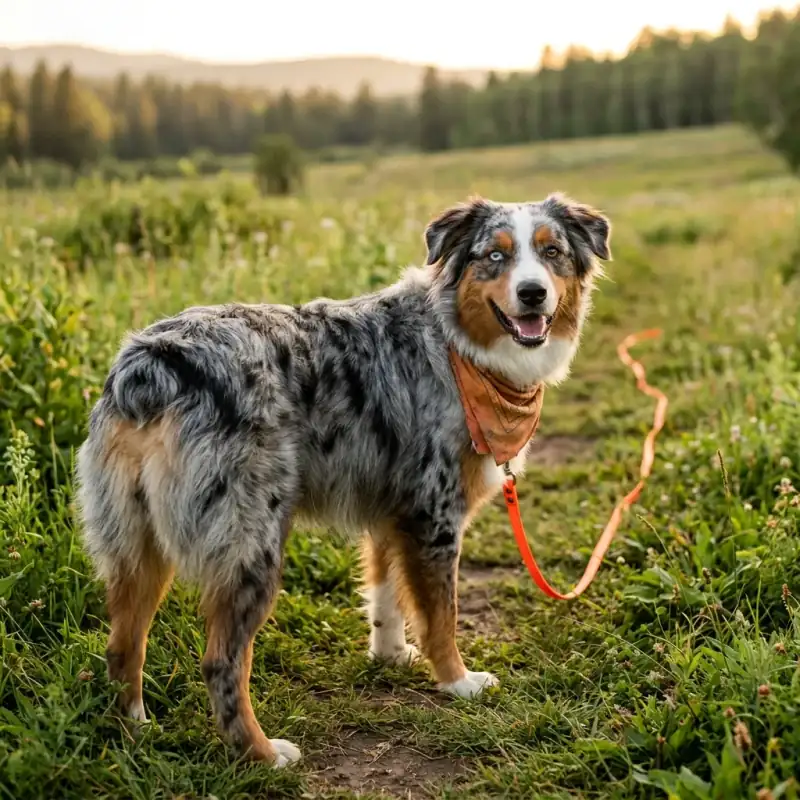
Ask a good trainer for the one tool that would most improve the average dog’s life, and a lot of them will say the same thing: a long line. It’s the single most useful piece of kit most owners don’t own — the bridge between a six-foot leash and true off-leash freedom.
A long line (also sold as a long leash, training lead or recall lead) lets your dog roam, sniff and explore over 15 to 50 feet while you stay in control. That makes it the backbone of recall training and a safe way to give leash-bound dogs real freedom.
Here’s how to choose the right one and, just as important, how to use it without hurting your hands or your dog.
What a long line is actually for
Two big jobs:
- Building a reliable recall. You can’t teach a dog to come back from freedom if it never has any. A long line gives controlled freedom — your dog gets 30 feet of independence, and if the recall fails, you still have the line. It’s how you practise the real thing safely before you ever trust true off-leash. Our full guide to training a reliable recall covers the method itself in detail.
- Safe near-off-leash freedom. On trails where the law requires a leash, or with a dog whose recall isn’t bombproof yet, a long leash lets them sniff, wade and explore far more than a six-foot lead allows — the enrichment of off-leash without the risk.
It is not a retractable leash, and it’s not for tying a dog out unattended. More on both below.
Choose the material first
Material matters more than brand. Three main options:
BioThane (coated webbing) — best all-rounder
BioThane is nylon webbing coated in a waterproof polymer, and it’s what most trail owners land on. It’s waterproof, mud-proof and stink-proof — drag it through a bog and wipe it clean. It doesn’t absorb water and get heavy, doesn’t hold odour, and doesn’t give the rope burn that bare webbing can.
It also tangles less than wet nylon, because the smooth coating doesn’t grip itself. The trade-off is a slightly higher price and a touch more weight than thin nylon. For anyone hiking near water and mud, it’s worth it.
Disclosure: some links below are affiliate links. If you buy through them we may earn a small commission at no extra cost to you.
Check Long-Line Leashes on Amazon →
Flat nylon webbing — budget pick
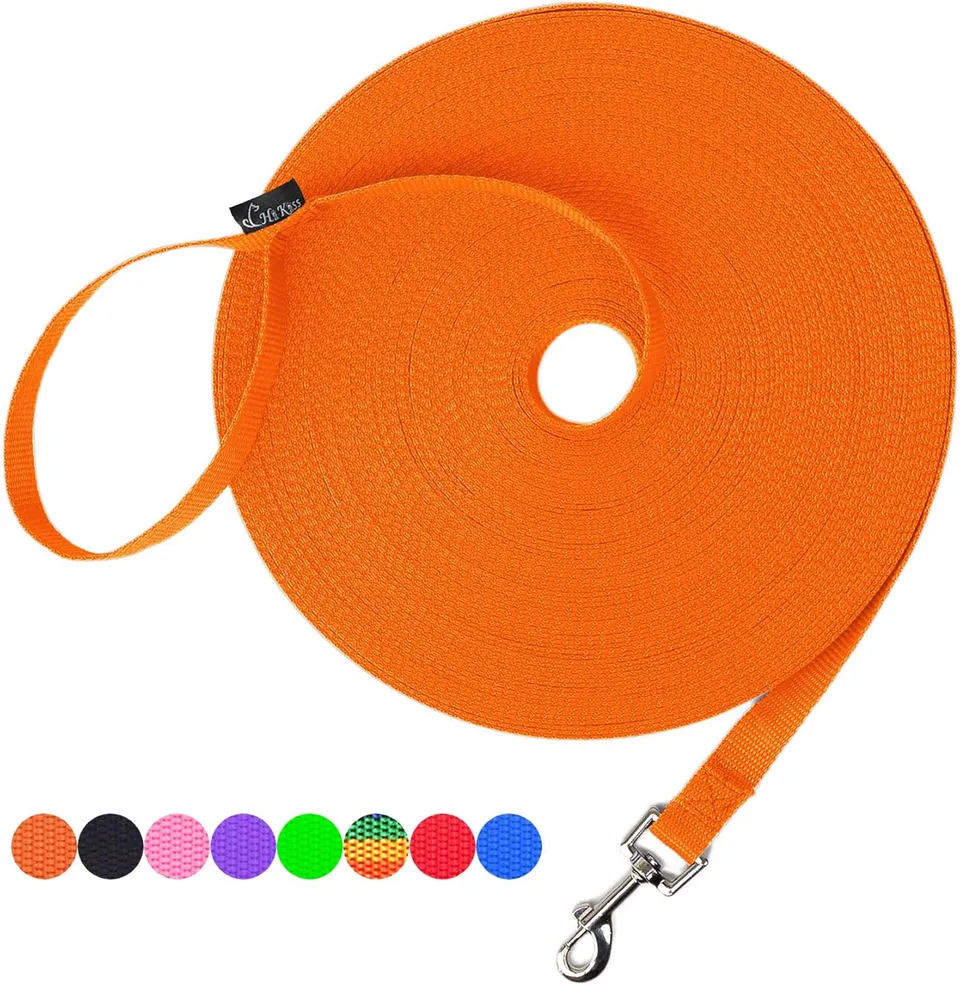
Cheap, light and widely available. The downsides show up in the field: nylon soaks up water and mud, gets heavy and grimy, holds smell, and can give a nasty friction burn if it runs through your hand under tension. It also stiffens as it dries dirty, which makes it tangle more over time.
Fine for dry-field training and a good way to find out whether you’ll actually use a long line before spending more. Less pleasant for wet trails.
Rope and long leather — niche
Rope lines are grippy and strong but tangle readily and hold water. Quality leather is lovely in the hand and ages well, but it’s expensive, needs conditioning, and hates being soaked — which rules it out for most trail use. Both are more specialist choices than everyday gear.
Then choose the length
Match length to the job — longer isn’t automatically better, because every extra foot is more to manage and untangle.
| Length | Best for | Notes |
|---|---|---|
| 15–20 ft | Everyday sniffy walks, campsite downtime, learning to handle a line | Easiest to keep tidy. Start here. |
| 30 ft | Recall training in open space | The sweet spot — real independence, still manageable. |
| 50 ft | Advanced work in wide-open areas | Maximum freedom, maximum tangle. Experienced handlers only. |
Many owners simply own two: a 15 ft for daily life and a 30 ft for training.
Don’t overlook the hardware and width
The two specs people ignore are the ones that fail first.
The clip. A cheap bolt snap is the weak point on most budget long leashes, and a big dog hitting the end of 30 feet generates real force. Look for a solid brass or stainless trigger snap, and check it for a smooth swivel — a clip that can’t rotate transmits every twist in the line straight into your dog’s harness.
The width. Wider is not automatically better. A 1-inch line on a 15 lb dog is heavy enough to drag their harness sideways and make the whole thing unpleasant. Rough guide:
- Under 25 lb: 1/2 inch or narrower
- 25–60 lb: 1/2 to 3/4 inch
- Over 60 lb: 3/4 to 1 inch
Skip the bungee sections. Shock-absorbing bungee panels sound protective but add stretch you can’t predict, which makes precise handling harder and lets a dog build more speed before the line catches.
Handles are optional — and a loop can be a liability. A fixed loop handle is easy to grab, but it’s also easy to catch on a branch or your own wrist. Many trainers prefer a handle-free line, or one with a small loop only.
The injury data nobody puts on the packaging
The handling rules below usually get written as common sense. They are better than that — there is real emergency-department data behind them, and it reframes what a leash actually is.
A study in the American Journal of Emergency Medicine pulled dog-leash injuries from the US National Electronic Injury Surveillance System across 2001–2018. From 8,189 recorded cases it produced a national estimate of 356,746 leash-related injuries treated in emergency departments. The rate did not hold steady either: it climbed from 25.4 per million people in 2001 to 105.5 in 2018 — more than four times higher by the end of the period.
The breakdown is the useful part, because it maps exactly onto how a long line goes wrong:
| Mechanism | Estimated injuries |
|---|---|
| Pull | 193,483 |
| Trip / tangle | 136,767 |
| Other or unknown | 26,496 |
And the injuries were not scrapes. The three most common diagnoses were fracture (26.8%), strain or sprain (26.0%), and contusions or abrasions (17.7%). Adults made up 88.2% of patients, 73.0% were female, and 37.4% of these injuries happened at home rather than out on a trail.
One honest caveat: that study looked at dog leashes as a category and did not separate long lines, retractables and standard leads. So it cannot tell you a long line is riskier than a six-foot lead. What it does tell you is that the two ways a leash hurts people are pull and trip/tangle — and a long line is, by design, thirty to fifty feet of exactly those two things. Every rule below targets one or the other.
Use it safely — the part that matters
A long line used carelessly can injure you or your dog. The rules:
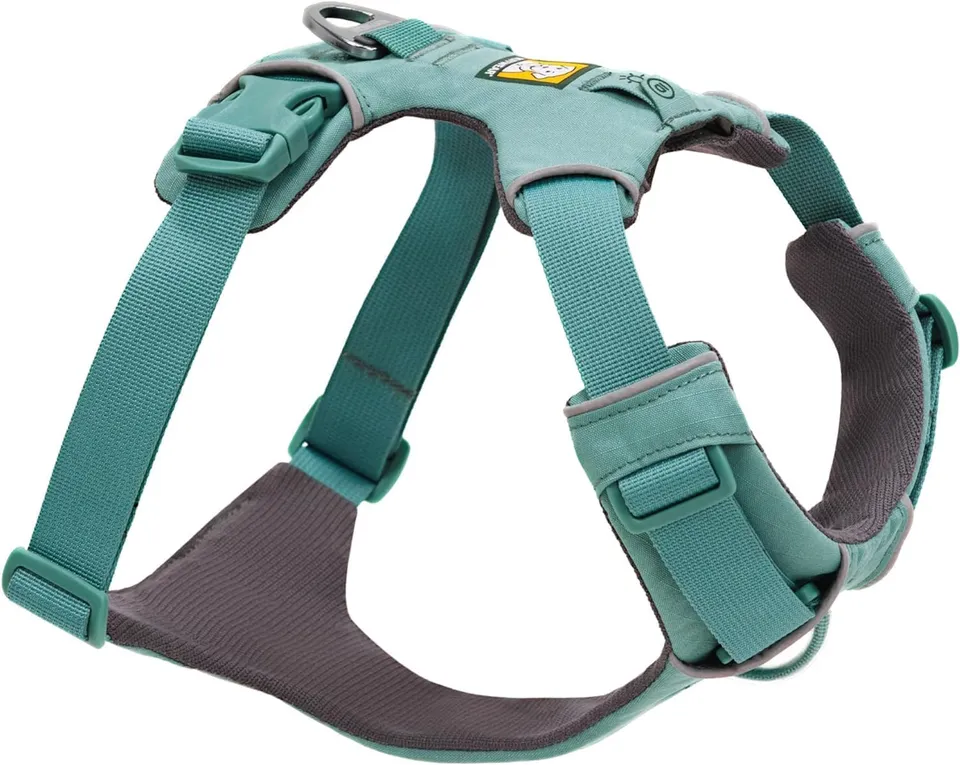
- Clip to a harness, never a collar. A dog sprinting to the end of 30 feet and hitting a collar can suffer a serious neck jolt. A well-fitted harness spreads that force across the chest. A no-pull design like the Ruffwear Front Range works well. Never combine a long line with a slip lead, choke chain, or prong collar.
- Wear gloves. A line running through a bare hand under a lunge gives real friction burns. Light gloves solve it entirely, and they’re the difference between managing a bolt and letting go of one.
- Never wrap the line around your hand or wrist. A sudden bolt can break fingers or pull you off your feet. Let it feed and gather it in loose folds instead.
- Don’t let big loops drag where they can snag — or wrap around your dog’s legs, another hiker, or another dog at speed. A line at ankle height across a trail is a genuine hazard to strangers.
- Manage the slack. The skill is gathering and feeding line so there’s freedom without a huge tangle on the ground. It takes a little practice; the 15 ft is where to learn it.
- Check the line for wear. Webbing frays where it drags over rock, and the section nearest the clip takes the most abuse. Run it through your hands every few weeks.
- Leave it in the pack in bear habitat. The whole value of a long line is the distance it buys, and distance is precisely what lets a dog find a bear before you have seen one — and then return to you with it following. Hiking with dogs in bear country has the numbers; a short lead is the tool there.
Why not a retractable leash?
Retractable leashes look like they solve the same problem. They don’t, and they’re worth actively avoiding for this job:
- They teach pulling. A retractable maintains constant tension, so the dog learns that leaning into the leash is what produces forward movement. Recall training needs the opposite lesson.
- The thin cord is dangerous. A narrow cord under tension concentrates force onto a small area of skin, which is how the cuts and friction burns to hands and legs happen, and it is nearly invisible to other trail users. We are deliberately not quoting a retractable-specific injury statistic here: the emergency-department study above covers leashes as a category and does not break retractables out, and most of the figures circulating online trace back to sources that do not either.
- The lock fails at the worst moment. A dog accelerating toward a road or another dog is exactly when a plastic brake gets dropped or slips.
A flat long line is slack by default, visible, and safe to handle. That’s the whole argument.
Care and storage
BioThane cleans with soapy water and a wipe — that’s genuinely the entire routine. Nylon needs a proper wash when it gets muddy or it stiffens and starts to smell; wash it by hand and let it dry fully before storing, because a damp coiled line mildews.
For storage, fold rather than tightly coil. A line stored in a tight spiral develops a permanent twist that makes it tangle every time you deploy it.
How this fits into recall training
The long line is the equipment half of the answer. The method half — the actual sessions, the mistakes that break a recall, and how to build up to real-world distraction — is a bigger subject than a gear guide can hold. We’ve covered it properly in our guide to dog recall training.
The very short version, so you know what the line is for:
- Let your dog wander to the end of the line in a low-distraction area.
- Call once, in a happy voice, and make yourself worth coming to.
- When they come, pay big — high-value food, real enthusiasm.
- If they ignore you, don’t reel them in like a fish. Move closer, reduce the difficulty, and try again.
- Add distance and distraction slowly, over many sessions. Only when recall is boringly reliable on the line do you consider off-leash where it’s legal.
For where that fits into hitting the trail, see our beginner’s guide to hiking with your dog — and note that on most Pacific Northwest trails a leash is legally required regardless of how good your recall is.
Coming off the long line
The point of a long line is to make itself unnecessary, and the transition is where people either rush or never start.
Drop it before you drop it. The intermediate step most owners skip is letting the line drag. Unclip nothing — just stop holding it. Your dog still feels the weight, you can still stand on it, and you get to see what their recall does when there is no tension in the system at all. Several sessions of that tell you far more than the same sessions with the line in your hand.
Shorten before you remove. Going 30 feet to nothing is a bigger jump than it looks. A dragging 15-footer, then a dragging 6-footer, then a short tab, is a ramp rather than a cliff.
Change one thing at a time. New place, new distractions, new freedom — pick one. The first off-leash attempt belongs somewhere boring and enclosed, not somewhere exciting and open.
Go back to it without treating it as failure. A long line is not a beginner’s tool you graduate from permanently. A new environment, adolescence, a scare, a rescue dog’s first six months — all are reasons to put it back on for a while. The dogs whose recall stays reliable tend to belong to people who never got precious about the line.
If any of that is unfamiliar territory, the method itself lives in our recall training guide, and the honest framing of when off-leash is legal and appropriate in the first place is in Leave No Trace with your dog.
The bottom line
A long line is cheap, simple, and quietly transformative — the tool that turns a dog stuck on a six-foot leash into one that gets real freedom and, eventually, a recall you can trust.
Get a BioThane line for wet-and-muddy trail life, pick 15–20 ft for everyday and 30 ft for training, match the width to your dog’s size, always clip to a harness, and wear gloves. Then go teach your dog that coming back is the best part of being free.
Sources
-
Forrester MB — Dog leash-related injuries treated at emergency departments, Am J Emerg Med 2020;38(9):1782–1786 — NEISS 2001–2018; the pull vs trip/tangle split and injury types. Covers leashes as a category, not long lines specifically.
-
American Kennel Club — Poisoned Cues: What They Are and What to Do
Frequently asked questions
What is a long line leash used for?
A long line is a 15–50 ft leash that gives a dog freedom to explore and sniff while you keep control — mainly for training a reliable recall, and for letting dogs enjoy near-off-leash freedom safely where the law or their training doesn't allow true off-leash. It's the bridge between a 6 ft leash and trusting your dog off-lead entirely. You'll see it sold as a long line, a long leash, a training lead, or a recall lead; they're all the same tool.
What length long leash should I get?
For everyday sniffy walks and campsite downtime, 15–20 ft is easiest to manage. For active recall training in open space, 30 ft is the sweet spot. Go to 50 ft only for advanced work in wide-open areas — long lines tangle and get harder to control the longer they get. Many owners end up keeping both a 15 ft and a 30 ft.
Should a long line attach to a collar or a harness?
Always a well-fitted harness, never a collar. A dog hitting the end of a long line at speed can be seriously hurt by a collar's jolt to the neck. A harness spreads that force across the chest. Clip to the back ring of a Y-front harness for the safest setup — and never use a long line with a slip lead, choke or prong collar.
Is a long line the same as a retractable leash?
No, and the difference matters. A retractable leash keeps constant tension on the dog, which actively teaches pulling — the opposite of what recall training needs. The thin cord also causes serious cuts and burns, and the handle can be ripped from your hand. A long line is flat, slack by default, and lets your dog learn that freedom doesn't require pulling.
How do you keep a long line from tangling?
Three habits do most of the work. Gather the line in loose figure-eight folds in your hand rather than coiling it into a spiral, which twists. Feed and gather actively as your dog moves instead of letting it all pile on the ground. And start with a 15 ft line while you learn the handling — every extra foot multiplies the tangles. A BioThane line also helps, because it doesn't grip itself the way wet nylon does.
Can I use a long line to tie my dog up?
No. A long line is a handled tool, not a tie-out. Left attached to a fixed point unattended, a dog can wrap the line around legs, a tree, or their own neck, and there's nobody managing the slack. Use a purpose-made tie-out with a swivel for campsite staking, and keep the long line for when it's in your hand.
Comments
Got a question, a tip, or a correction? Leave a comment — no account, no sign-in. Just your name and your thoughts.
Loading comments…