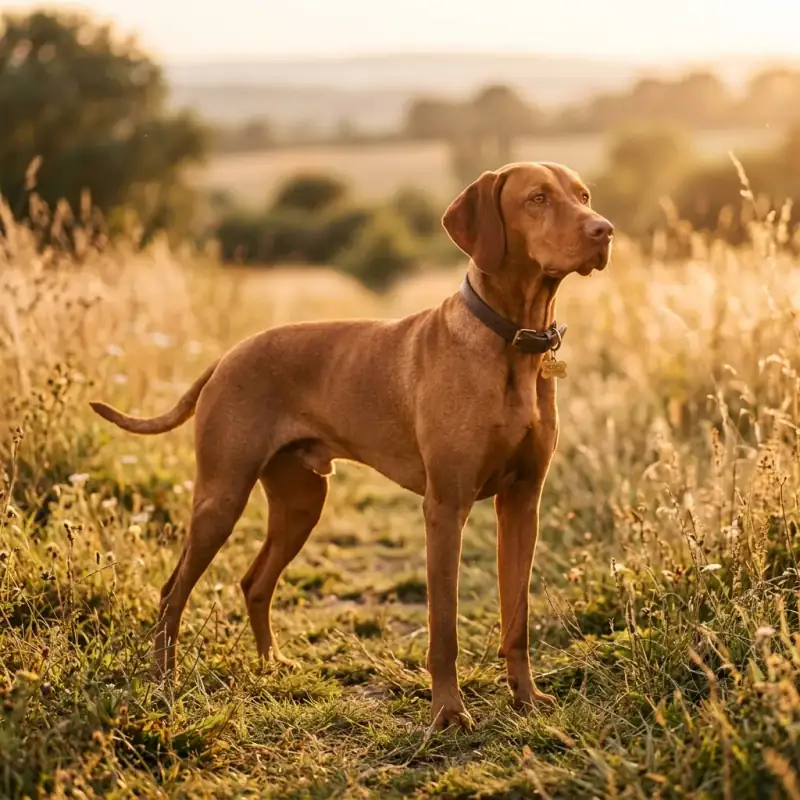
There is a reason the Vizsla is one of the most beloved breeds among runners, hunters and active owners, and a reason it appears again and again on lists of dogs that struggle most to be left alone. Both come from the same place. This is a dog bred for total partnership: to range and hunt all day at the side of one person, and to live in near-constant physical closeness to them. That produces an athlete of rare grace and endurance, and a companion of rare devotion. It also produces a dog that genuinely cannot be treated as furniture you leave at home.
The Vizsla is often called the ultimate running companion, and for a fit, present, affectionate owner that is close to the truth. But the two things that most often go wrong are baked into the very traits that make the breed special: the intense, sometimes overwhelming need for companionship that “Velcro dog” only half captures, and a growth-plate rule that quietly ruins the joints of young Vizslas started too hard, too soon. This guide covers what the breed is brilliant at, and does not soften either.
Vizsla at a glance
| Height | 22–24 in (males), 21–23 in (females) |
| Weight | 55–60 lb (males), 44–55 lb (females) |
| Life expectancy | 12–14 years |
| Coat | Short, smooth, single coat — little insulation |
| Shedding | Low to moderate |
| Energy | Very high; a bred-to-range hunting athlete |
| Adventure verdict | Possibly the finest running and all-day trail partner there is — for an owner who is genuinely, almost always, there |
Heights, weights, life expectancy and health flags come from the official AKC breed standard. Our verdict: as a running and hiking companion for an active, present owner, the Vizsla is superb: light, tireless, elegant, devoted, and happiest logging miles at your side. The whole question is whether your life has room for a dog that wants to be with you for almost all of it. If it does, few breeds give more back. If it does not, few breeds suffer more.
The dog behind the reputation
The Vizsla is an ancient Hungarian sporting breed, a pointer-retriever developed to hunt fur and feather across the open country of the Hungarian plains, working in intimate partnership with the hunter. The AKC describes the breed as “happy, loyal, and entertaining,” and every Vizsla owner recognises all three: this is a bright, affectionate, faintly comical dog that wants to be involved in everything.
The defining trait is connection. Vizslas were not bred to work independently at a distance like some hunting breeds; they were bred to work with a person, close and responsive, reading intent moment to moment. That heritage lives on as an intense human orientation: the Vizsla wants contact, proximity and inclusion to a degree that surprises people, and it is emotionally sensitive in a way that makes it feel almost more like a shadow than a pet. This is the breed’s greatest gift and its central challenge, and they are the same thing.
The Velcro dog: devotion and its cost
“Velcro dog” is the Vizsla’s affectionate nickname, and it is worth taking seriously as the honest warning it also is. The need for companionship in this breed is not a training issue or a phase; it is, as breed sources put it, closer to a biological drive, the direct legacy of a dog bred to spend all day at arm’s length from one person.
In daily life that means a Vizsla will follow you from room to room, press against you on the sofa, and want to be part of whatever you are doing. Lovely, until you have to leave. Vizslas are among the most separation-anxiety-prone breeds there are, and the anxiety tends to develop faster and burn hotter than in other dogs. A Vizsla left alone for long or regular stretches will often pace, dig, chew, howl and pour out an enormous amount of nervous energy, and the distress is real, not defiance. Common guidance is that a Vizsla should not be left alone for more than about four or five hours, and that a home where the dog would be alone all day is simply the wrong home.
The honest implications:
- Be ruthlessly realistic about your lifestyle. If the dog would routinely be alone for a full working day, this is the wrong breed. Full stop. That is the single most important sentence in this guide.
- Condition alone-time from day one, gradually and positively, so short absences are normal and boring.
- Meet the exercise need first. A tired Vizsla copes with being alone far better than a coiled one; though exercise reduces the problem, it does not erase the underlying need.
Choose a Vizsla with your eyes open and this devotion is one of the great joys of dog ownership. Choose one for its looks and running ability while working long days away from home, and you are setting up both of you to fail.
Living with a Velcro dog: what actually helps
None of this means separation anxiety is a life sentence; plenty of Vizsla owners manage it well, and it is worth knowing the levers that genuinely move it. Crate-training done kindly gives an anxious dog a secure den rather than the run of an empty house to panic in. Serious enrichment around your departure helps enormously: a hard morning run, then a food puzzle or a frozen, stuffed chew handed over as you leave, turns your going-out into something other than a loss. Doggy daycare, a midday dog-walker, or a work-from-home household change the picture entirely, and many Vizsla people simply arrange their lives so the dog is rarely alone for long. Some owners add a second dog for company, and for the right household it can take the edge off, but go in clear-eyed: two dogs is two dogs’ worth of exercise and needs, and a companion dog is not a reliable cure for a Vizsla bonded above all to you. Above all, build alone-time up in small, positive increments from day one, rather than discovering the problem the first time you leave for a full day.
Exercise needs — and the growth-plate rule that matters most
A Vizsla needs a lot of exercise: the AKC sets a floor of around 30 minutes of active exercise daily plus regular hard, off-leash running, and in practice most Vizslas want one to two hours of real activity a day, physical and mental combined. Running, trail hiking, fieldwork, swimming and scent games all suit a dog built to range. And, as with every velcro breed, mental work and inclusion matter as much as raw miles.
But the most important exercise fact about this breed is a restriction, and it is one the AKC states outright: young Vizslas should not run long distances until they reach maturity, at around 18 to 24 months. Here is why it matters so much for this breed specifically. The Vizsla’s reputation as a superb running partner is exactly what tempts new owners to take their leggy, athletic, willing puppy out on real runs, and hard, repetitive distance work on open growth plates can cause lasting joint damage in a dog that would otherwise have run soundly for a decade. The tragedy is that the injury is entirely preventable.
So the rule is simple and firm: until roughly 18 to 24 months, keep a Vizsla’s exercise self-paced and low-impact (free play, gentle walks, swimming, exploring) and save structured distance running for the mature dog. Our guide to how much exercise a dog really needs lays out sensible loads by life stage, and it is worth reading before the first tempting run.
Planning to make your Vizsla a running partner? That is exactly what the breed is for; just wait for the skeleton to finish, then build up gradually. Start with our beginner’s guide to hitting the trail with your dog, and see where the breed ranks in our best dog breeds for runners guide.
Trainability: brilliant, but handle with care
Vizslas are intelligent and eager to work with their people, and they train beautifully, with the right approach. The crucial thing to understand is their sensitivity. This is a soft, emotionally attuned breed, and harsh corrections or heavy-handed methods tend to produce a fearful, shut-down dog rather than a compliant one. Patient, positive, reward-based training and calm consistency get the best from a Vizsla; frustration and force get the worst.
For an adventure dog, prioritise:
- Reliable recall. The hunting drive is real, and a Vizsla on a scent can range far. Build recall on a long-line before trusting it in open country.
Disclosure: some links below are affiliate links. If you buy through them we may earn a small commission at no extra cost to you.
Check Long-Line Leashes on Amazon →
- Calm alone-time, which for this breed is training and management combined; see above.
- Steady manners for a sensitive, bouncy dog that thrives on gentle structure.
Toys, play and gear that fit a Vizsla
Vizslas are playful and love to retrieve, chase and use their noses: fetch, flirt poles, and scent games are all excellent, joint-friendly outlets (mind the high-impact games until the dog matures). On gear, the Vizsla’s lean, athletic, medium build is easy to outfit, with two breed-specific notes:
- A harness for real activity. For running and hiking, a padded harness gives control without throat pressure; the Ruffwear Front Range fits the build well.
Check Ruffwear Front Range on Amazon →
- A cold-weather coat. The Vizsla’s short single coat and low body fat mean it feels the cold sharply; for winter runs and cold conditions, a well-fitted dog coat is a genuine kindness, not a fashion statement.
If you are buying for a Vizsla you do not live with, expect the dog to fall between sizes. A lean, deep-chested 44–60 lb build sits awkwardly on charts drawn around blockier breeds, and the short coat means a poorly-fitting coat rubs rather than forgives. Our gift guide for adventure dog owners covers what to give when measurements are not available.
Health and lifespan
Vizslas are generally healthy and reasonably long-lived, at 12 to 14 years, and responsible breeders screen for:
- Hip dysplasia — the standard orthopaedic screen; ask for the parents’ scores.
- Epilepsy — inherited seizure disorders occur in the breed; discuss a breeder’s lines.
- Allergies and skin conditions — the breed is somewhat prone to these; worth asking about.
And, though it is not a health test, the growth-plate caution above is the single most impactful thing you control for a young Vizsla’s lifelong soundness.
None of this is a diagnosis. It is the honest health picture of the breed — screen through a good breeder and manage your individual dog with your vet.
Grooming and shedding
Grooming a Vizsla is about as easy as dog ownership gets: the short, smooth single coat needs little more than an occasional brush with a rubber mitt and the rare bath, and it sheds relatively modestly. There is no undercoat to blow and no feathering to mat. The single genuine grooming-adjacent duty is remembering what that thin coat doesn’t do: it offers almost no protection from cold or rough weather, so the “care” a Vizsla needs is less brushing and more sensible thermal management on cold and wet outings.
Is a Vizsla right for you?
Four questions, and the first one settles most of it:
- Will the dog have company for most of the day? This is the Vizsla’s defining requirement. If it would routinely be alone for a full working day, choose a different breed; no amount of love makes up for it.
- Are you genuinely active? One to two hours of real exercise, daily. A Vizsla without it becomes anxious and destructive.
- Can you protect the puppy from itself? Hold off on distance running until 18–24 months, however willing the young dog seems.
- Are you a calm, positive handler? This sensitive breed needs gentleness and consistency, not force.
If you can say yes, and above all yes to the first, the Vizsla becomes one of the most connected, elegant companions a person can have: a shadow at your heel for every mile of the next dozen years. If you can’t, the kind thing, for the dog as much as for you, is a more independent breed.
The Vizsla’s closest relatives on most shortlists are the German Shorthaired Pointer, a touch sturdier and less clingy, with the same versatile brilliance, and the Weimaraner, which shares the separation-anxiety problem in a larger frame, while the Labrador offers comparable athleticism with a far more independent, leave-able temperament. For the whole field measured against the veterinary evidence, see our hub guide, The Best Adventure Dog Breeds for Hiking & Camping.
Sources
Frequently asked questions
Why are Vizslas called Velcro dogs?
Because they stick to you. The Vizsla was bred to work in constant, close partnership with a single hunter, often within arm's reach all day, and the result is a dog with an unusually intense, near-constant need to be with its person. A Vizsla will follow you from room to room, lean on you, and want to be involved in everything you do. For the right owner it is deeply endearing; for someone who wants an independent dog, it is a lot. The nickname is affectionate, but it is also an honest description of a real, breed-defining need.
Do Vizslas have separation anxiety?
They are one of the most separation-anxiety-prone breeds there is, and the anxiety tends to develop faster and hit harder than in many other dogs. A Vizsla left alone for long or regular stretches will often pace, dig, chew, howl and work itself into real distress. Most guidance suggests a Vizsla should not be left alone for more than about four or five hours, and that they are genuinely unsuited to homes where the dog would be alone all day. Careful early conditioning to alone-time helps, but the underlying need for companionship is part of the breed.
How much exercise does a Vizsla need?
A lot. The AKC advises a minimum of around 30 minutes of active exercise daily as a floor, plus regular hard, off-leash running for a dog bred to range and hunt all day; in practice most Vizslas need one to two hours of real activity, combining physical exercise with mental work. This is a high-energy sporting breed, not a companion that will be satisfied by a gentle walk. An under-exercised Vizsla channels that energy into anxiety and destruction.
Can I run long distances with my Vizsla puppy?
No, and this matters more for Vizslas than most people realise. The AKC is explicit that young Vizslas should not run long distances until they reach maturity, at around 18 to 24 months, because hard distance work on open growth plates can damage the joints they will need for life. Vizslas make superb adult running partners, which is exactly why so many are started too young. Keep a puppy's exercise self-paced and low-impact, and build distance only once the skeleton has finished growing.
Are Vizslas sensitive dogs?
Very. Vizslas are known for being emotionally sensitive and closely attuned to their owner's moods, and they respond badly to harsh handling: heavy-handed corrections tend to produce a fearful, shut-down dog rather than a compliant one. They train beautifully with patient, positive, reward-based methods and consistency. That sensitivity is part of what makes them such connected, affectionate companions, but it means they need a gentle, emotionally steady owner.
Do Vizslas get cold?
Yes. The Vizsla's short coat and lean, athletic build leave it with very little insulation, so it feels the cold noticeably and can struggle in winter or cold water. A well-fitted dog coat for cold-weather outings, sensible limits on cold exposure, and a warm place to recover are all reasonable. They are hardy, tireless dogs in the right conditions, but they are not built for lounging in the snow.
Comments
Got a question, a tip, or a correction? Leave a comment — no account, no sign-in. Just your name and your thoughts.
Loading comments…