
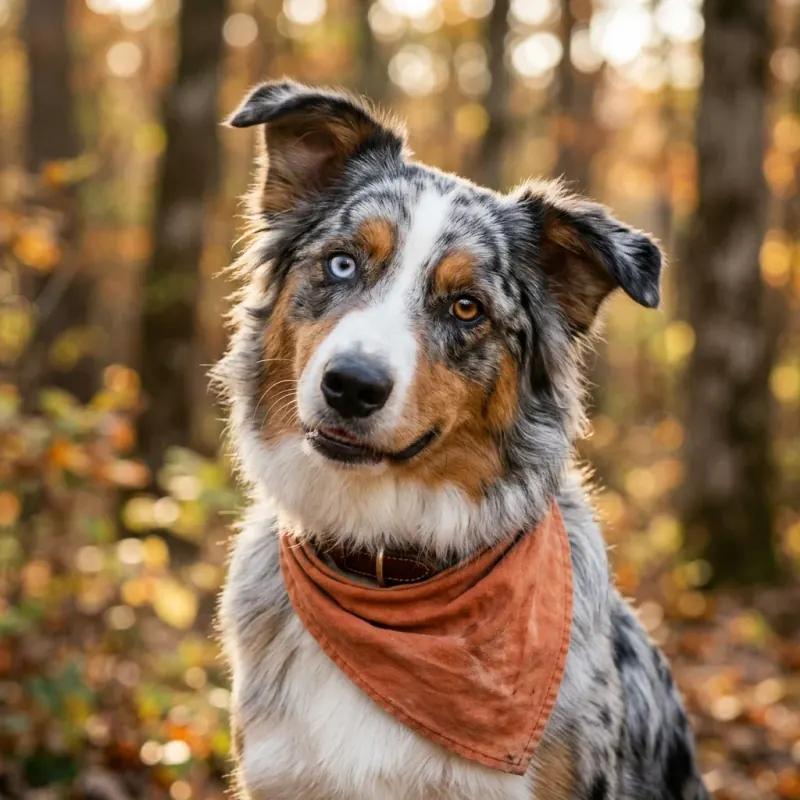
Almost every owner who says their dog “has no recall” is describing the same situation: the dog comes back perfectly in the kitchen, adequately in the garden, and not at all in the one place it matters. That isn’t a stubbornness problem, and it usually isn’t a training-effort problem either.
It’s an economics problem. At the moment you call, your dog performs a very fast calculation: what happens if I go back, versus what happens if I keep doing this? Recall training is the work of making sure that calculation comes out in your favour — reliably, under distraction, when a squirrel is involved.
Here’s how a recall actually gets built, the specific things owners do that break it, and how to rescue one that’s already stopped working.
What “reliable recall” actually means
Be honest about the target. A reliable recall means your dog turns and comes on the first cue, away from something they’d rather be doing, without a treat visible. Anything less is a recall that works in easy conditions — which is to say, a recall you can’t depend on when you need it.
Two things follow from that definition:
- A recall that only works when your dog is already bored is not trained. It’s a coincidence.
- A recall is a skill with levels, not a switch. Your dog doesn’t “know come” or “not know come” — they know it at a certain difficulty. The whole job is raising that difficulty carefully.
The rule that breaks most recalls
If you take one thing from this article, take this:
Never punish a dog for coming back to you. Ever. Under any circumstances.
You call your dog. They ignore you. You call again. And again. Five minutes later they trot over, and you’re furious — so you scold them, or grab their collar sharply, or clip the leash on with obvious irritation.
From the dog’s point of view, the thing that just got punished is arriving. Not the ignoring, which happened minutes ago and which dogs don’t connect backwards. The arriving. Do this a handful of times and you teach your dog that returning to you predicts something unpleasant, which makes the next recall worse, which makes you angrier — and the spiral is now the reason your dog “has no recall.”
Every recall that ends with your dog reaching you gets paid. Every single one, however long it took, however annoyed you are. If you’re too frustrated to be genuinely pleasant about it, that’s the signal to stop training for the day.
The poisoned cue: why “come” stops meaning anything
There’s a name for what happens to most recall words. Trainers call it a poisoned cue — a cue that has lost its meaning because of how it’s been used.
The AKC identifies “come” as the single most commonly poisoned cue in dog training, and it gets poisoned in four predictable ways:
- Repeating it. “Come. Come! Come here. COME!” If you routinely say it four times before your dog moves, you have taught them the cue is “come” said four times with rising panic. The first three are now noise.
- Using it only to end fun. If “come” reliably predicts the leash going on and the walk ending, your dog has correctly learned that the word means stop enjoying yourself. They aren’t defying you — they’re responding accurately to what you taught.
- Inconsistent reinforcement across the household. One person pays every time, one person pays sometimes, one person uses the word to call the dog for a bath. The cue means different things depending on who says it, which means it means nothing.
- Using it when you can’t enforce or reward it. Calling across a field on a hope, getting ignored, and doing nothing about it. Each unrewarded, unenforced repetition weakens the word a little more.
How to fix a poisoned cue
You have two options, and the second is usually easier:
- Retrain the original word from absolute zero, as if the dog had never heard it. This works, but you’re fighting an existing association.
- Pick a new word and start clean. “Here”, “close”, “to me” — anything you haven’t already burned through. Then train it properly from stage one below, and retire the old word completely. Don’t use both.
Most trainers reach for the new-word option, because starting fresh is faster than un-teaching. Whatever you choose, protect the new cue: it only comes out when you’re prepared to reward it and reasonably confident it’ll work.
Building a recall from zero
The method is not complicated. The discipline is in not skipping stages.
Stage 1 — Charge the word (indoors, zero distraction)
Start in the most boring room in your house. Say your recall word once, then immediately give a high-value treat. Your dog doesn’t have to do anything — you’re not asking for a behaviour yet, you’re building an association. Word, then food. Ten or fifteen times, a couple of times a day.
Use genuinely high-value food. AKC’s guidance is explicit about this: chicken, cheese, freeze-dried liver — not the dry kibble your dog gets for free in a bowl. Recall is the one cue where you pay above market rate, always.
Stage 2 — Add a little distance
Once the word makes your dog’s head snap round, start using it when they’re a few feet away and already drifting toward you. Say it once, as they commit to moving, then pay when they arrive.
That timing matters. Early on, you cue the behaviour that’s already happening, so the word never gets associated with failure. Build to calling across a room, then from another room, then up the stairs.
Reward at your feet, not at arm’s length. You want the dog fully in to you, not stopping six feet out to snatch a treat and leave. Many trainers hold the food at their knees so the dog comes right in, and some add a light collar or harness touch before feeding, so hands reaching for them predicts food rather than the end of freedom.
Stage 3 — Take it outside, on a long line
The garden, then a quiet field. This is where a long line becomes essential: 15–20 ft to start, 30 ft as you progress. The point isn’t to reel your dog in — it’s that a failed recall can never be rehearsed off-lead. Every time your dog ignores you and gets away with it, the ignoring gets stronger.
Clip the line to a well-fitted harness, never a collar. A dog hitting the end of 30 feet at speed can be badly hurt by a collar.
If your dog doesn’t respond: don’t repeat the word. Move closer, make yourself more interesting — crouch, turn away, run backwards a few steps, make an idiot of yourself — and reward the arrival. Then make the next rep easier.
Stage 4 — Add distraction on purpose, one step at a time
This is the stage everyone rushes, and it’s the one that decides whether you end up with a real recall.
Distraction has to be graded. Don’t go from an empty field to a busy park. Find the distraction, then start far enough away that your dog can still hear you, and work closer over many sessions:
| Level | Example |
|---|---|
| 1 | Empty field, nothing happening |
| 2 | A person walking at 100 m |
| 3 | Another dog at 50 m, on lead |
| 4 | Interesting smells, birds, joggers nearby |
| 5 | A dog playing at 20 m |
| 6 | Wildlife, off-lead dogs, a dropped sandwich |
Change one variable at a time — more distance or more distraction, never both in the same session. And use the two-failure rule: if your dog fails twice in a row, the environment is too hard. Back off to an easier level rather than drilling a failure.
Stage 5 — Real world, still on the line
Before you ever unclip, your dog should be recalling reliably on a long line in genuinely distracting places, over weeks, not days. That’s the evidence you need. “He’s usually good” is not evidence.
The payment rules
How you pay determines how well the recall holds.
- Pay every time during learning. No exceptions, no testing them.
- Don’t show the food first. If the treat comes out before the cue, you’ve built a bribe — the dog is responding to visible food, not to the word. Call first, produce the reward after they commit.
- Move to variable rewards once it’s solid. Sometimes one treat, sometimes a jackpot of five, sometimes a thrown ball or a burst of tug. Unpredictable payoffs are more durable than predictable ones — the dog keeps playing because the next one might be big.
- Use a jackpot for the hard ones. When your dog leaves something genuinely difficult to come back, pay disproportionately. That’s the rep that builds the recall you actually want.
The single best trick: call, pay, release
Here’s the technique that fixes more recalls than any other, and it directly counteracts the “come means fun is over” problem.
While your dog is happily playing or sniffing, call them. Pay well. Then release them straight back to what they were doing — “off you go.”
Do this constantly. The lesson your dog learns is that coming back doesn’t cost them anything. It’s a small profitable interruption, not the end of the world. Once that’s established, the occasional real recall — the one where the leash does go on and you do go home — doesn’t damage the cue, because it’s the rare exception rather than the rule.
The corollary: don’t only call your dog at the end of the walk. Clip the leash on ten times during a walk and release them again, so the leash stops predicting the end.
An emergency recall, kept separate
Alongside your everyday recall, it’s worth building a second cue you use only in genuine emergencies — a dog heading for a road, wildlife, another dog that looks like trouble.
Pick a distinctive sound you’d never use casually — a specific whistle pattern works well. Charge it heavily with something extraordinary: a whole chicken breast, not a training treat. Practise it rarely, maybe once a fortnight, and always pay out at the extraordinary level. Never use it for anything ordinary.
The point is a cue that has never once been disappointed and never once been ignored, so it retains full power on the day you actually need it.
Why a whistle is worth considering
For dogs that spend time on trail, a whistle has three real advantages over your voice:
- Range. It carries much further, and stays audible over wind and water.
- Consistency. It sounds the same every time. Your voice doesn’t — it changes with mood, and dogs are extremely good at hearing frustration in it. A tense recall cue makes a dog less likely to come.
- A clean slate. It’s not a word you’ve already worn out on a hundred failed attempts.
Charge it exactly like a verbal cue: whistle, then food, many repetitions, before you ever use it at distance.
Common mistakes, collected
- Calling when you know they won’t come. Every ignored cue is a training rep in the wrong direction. If you’re not confident, go and get your dog instead of calling.
- Chasing. Dogs read chasing as a game, and it teaches them that running away starts one. Run the other way and let them chase you.
- Reeling in on the long line. The line is a safety net, not a winch. Guide gently, make yourself interesting, and make the next rep easier.
- Practising in the dog park. It’s the hardest environment there is, and it’s where most recalls go to die.
- Using the recall word for everything. Feeding, nail clipping, coming inside from the garden in the rain. Use a different, uncharged word for the boring stuff.
- Assuming it transfers. A recall trained in the garden does not automatically exist at the beach. New places need re-proofing, always faster than the first time, but not free.
- Letting it decay. Recall is maintained, not finished. Keep paying it occasionally for the rest of your dog’s life.
Be realistic about your dog
Some dogs arrive with the deck stacked against them, and it’s fairer to everyone to say so.
High prey-drive breeds are the honest exception to “any dog can be trained off-leash.” A Siberian Husky has a prey drive and running instinct that the AKC is blunt about: it isn’t a dog to trust off-lead, regardless of training investment. Sighthounds and many terriers sit in similar territory. With these dogs the goal is a good recall plus a long line for life — not a recall that replaces the line.
Herding and sporting breeds — a Border Collie, a German Shepherd, a Labrador — usually find recall easier, because they’re built to work in cooperation with a handler and to keep checking in. That’s an advantage, not a guarantee.
Adolescent dogs regress. Somewhere between about six and eighteen months, a lot of dogs appear to forget everything they knew. This is normal. Go back to the long line, lower the difficulty, and keep paying. It comes back.
And if your dog is under-exercised or under-stimulated, recall is fighting uphill — a dog with pent-up energy has far more incentive to keep running. Our guide to how much exercise a dog actually needs is a useful sanity check.
Before you go off-leash: the legal part
A good recall doesn’t override the law. Most trails require dogs to be leashed regardless of how well trained they are — nearly all national park trails in the US ban dogs entirely, and national forest and state park trails typically require a leash of six feet or shorter. Our guide to dog-friendly hikes in Washington and Oregon covers how those rules actually break down.
Off-leash where it isn’t permitted is how trails get closed to dogs — the Leave No Trace principles for dogs exist because that keeps happening. A long line is the answer in leash-required areas: your dog gets real freedom, and you stay legal.
For dogs that do go off-lead in big country, a GPS tracker is worth having — not as a substitute for recall, but as insurance for the day it fails.
The bottom line
A reliable recall is built from four things, and none of them is a special technique:
- Coming back is always, always worth it — paid every time, never punished, not even once.
- The cue is protected — said once, never worn out, never used to end the fun.
- Difficulty rises in small graded steps, on a long line, with failures prevented rather than corrected.
- You keep paying it for the rest of your dog’s life.
Do that consistently for a few months and you’ll have a dog that comes back. Skip the long line, rush the distraction, or scold a late return, and you’ll have the same recall problem you started with — no matter how many hours you put in.
Ready to take it to the trail? Start with our beginner’s guide to hiking with your dog, and pick up a long line before your first session. If running is where you’re headed, starting running with your dog covers the two limits that decide how fast you can build up.
Sources
- American Kennel Club — How to Train a Reliable Recall
- American Kennel Club — Poisoned Cues: What They Are and What to Do
- American Kennel Club — Hiking With Your Dog: Safety, Training and Gear
Frequently asked questions
How do I make my dog come to me when called?
Make coming to you the best available option, and never make it a bad one. In practice that means three things: pay generously every single time your dog reaches you, never call them for something they dislike (leash-on-and-go-home, bath, nail trim), and never punish a dog that comes back — even a late return has to be a good decision. Most dogs who 'won't come' have simply learned that coming back reliably ends the fun.
How do I train recall outside with distractions?
Add distraction in small, deliberate steps rather than jumping from your living room to a dog park. Use a 30 ft long line so a failed recall never gets rehearsed off-lead, and change only one variable at a time — more distance, or more distraction, never both in the same session. If your dog fails twice in a row, the environment is too hard: move further from the distraction and rebuild. Practising in a place where your dog can ignore you is how a recall gets destroyed.
How long does recall training take?
A dog can learn the mechanics in days. Building a recall that holds up against a squirrel takes months, and with some dogs it's a permanent maintenance job rather than a finished project. Expect several weeks of daily short sessions before you see reliability in mildly distracting places, and a few months before you'd trust it anywhere legal. Anyone promising a bombproof recall in a week is selling something.
How do I train my dog to walk off leash?
Off-leash walking is a recall plus a check-in habit, built on a long line first. The dog needs to come reliably under distraction, and to voluntarily look back at you every so often without being asked — reward every unprompted check-in and that habit grows. Only move off the long line where it's legal, in enclosed or low-risk areas, and understand that some dogs — high prey-drive breeds especially — never get there safely.
My dog only comes when I have treats. What do I do?
That's a signal the food became a bribe rather than a reward. The fix is to stop showing food before the recall — call first, then produce the reward after your dog commits and arrives. Keep the food out of sight and out of your hand when you give the cue. Then move to variable reinforcement: sometimes a small treat, occasionally a jackpot of several, sometimes a game instead. Unpredictable payoffs produce stronger behaviour than predictable ones.
Should I use a whistle for recall?
A whistle is worth considering for outdoor and trail dogs. It carries much further than a voice, it sounds identical every time — where your voice changes with mood, and dogs notice frustration — and it isn't a word you've already worn out. Charge it exactly like a verbal cue: whistle, then food, many times, before ever using it at distance. Many owners keep the whistle as a dedicated emergency recall and use a normal word for everyday.
Where do I start with recall training for dogs?
Start by not using the word. Most recall problems are not disobedience but a cue the dog has learned to ignore, so if "come" is already stale, pick a fresh word and protect it. Build in a quiet room before anywhere else, pay every single success generously at first, and release the dog back to what they were doing so coming back does not reliably end the fun. Add distance, then distraction, then location — one at a time. A long line is what makes the outdoor stage safe, and most dogs need one for far longer than their owners expect.
Comments
Got a question, a tip, or a correction? Leave a comment — no account, no sign-in. Just your name and your thoughts.
Loading comments…