
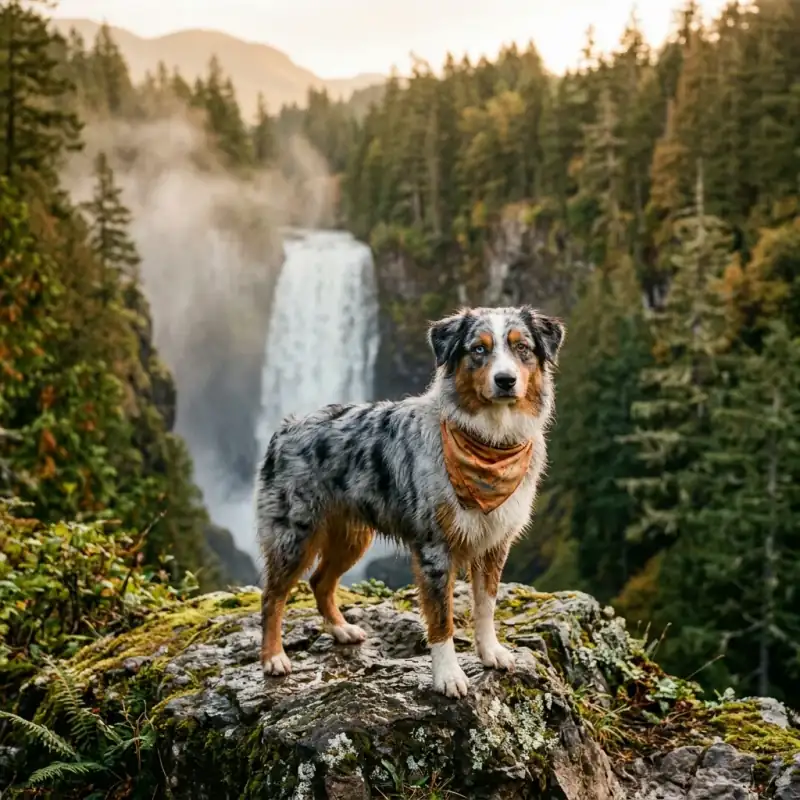
The Pacific Northwest might be the best place in the country to hike with a dog: waterfalls, alpine lakes, old-growth forest, and a mild, wet climate that dogs handle far better than desert heat. But there’s a catch that sends first-timers home disappointed — and once you know it, a huge range of trails opens up.
Here are real dog-friendly hikes across Washington and Oregon, the leash rules and parking passes that actually apply, and the one mistake to avoid before you even leave the driveway. Always confirm current regulations with the land manager before you go — rules change, and seasonal closures happen.
First, the national-park trap
The single biggest mistake: assuming a national park is dog-friendly. It usually isn’t. Mount Rainier, Olympic, and North Cascades national parks ban dogs from nearly all trails — they’re allowed only in parking lots, campgrounds, and on paved roads open to vehicles. People drive hours to Rainier with their dog and discover they can’t set a paw on a trail.
The fix is simple: aim for national forests, state parks, and state/county land, which are generally dog-friendly (leashed). The good news is that these surround the national parks and often deliver the same scenery. When Rainier is off-limits, a national-forest trail an hour away usually isn’t.
The one Mount Rainier exception worth knowing
There is exactly one place inside Mount Rainier National Park where your dog can legally walk a trail: the Pacific Crest Trail along the park’s eastern boundary, where leashed dogs (6-foot maximum) are permitted.
This comes with a trap of its own. At the popular Naches Peak Loop near Tipsoo Lake, only half the loop is PCT. Dogs are allowed on the PCT portion and are not allowed on the non-PCT section — so the loop can’t legally be completed with a dog. Walk the PCT half out and back, or go elsewhere.
Which pass do you need?
Washington and Oregon trailheads almost all require paid parking, and the pass depends on who manages the land. Getting this wrong is a ticket, not a warning.
| Land manager | Pass | Rough cost |
|---|---|---|
| U.S. Forest Service trailheads (WA & OR) | Northwest Forest Pass | ~$30/year or ~$5/day |
| WA State Parks & DNR land (incl. Mount Si, Tiger Mtn) | Discover Pass | ~$45/year |
| National parks (Rainier, Olympic, North Cascades) | America the Beautiful | ~$80/year |
The two you’ll actually use are the Northwest Forest Pass and the Discover Pass, and plenty of PNW hikers own both. Trailhead signs state the requirement, and the Washington Trails Association lists the required pass on each hike’s page.
Dog-friendly hikes in Washington
Lake Twenty-Two (Mountain Loop Highway)
A PNW classic and deservedly popular: a climb through mossy old-growth past waterfalls to a serene cirque lake beneath Mount Pilchuck. It’s a protected research natural area, so dogs must be leashed and stay on-trail — perfect for a rewarding half-day with a well-behaved dog. Forest Service land, so it’s a Northwest Forest Pass trailhead.
Mount Si (North Bend)
The Seattle area’s benchmark conditioning hike — a steep, sustained climb rewarded with big views over the Snoqualmie Valley and, on clear days, Mount Rainier and the city. Busy and leashed, it’s a great fitness test for a fit, conditioned dog.
Note the pass: Mount Si is DNR-managed, so it takes a Discover Pass, not a Northwest Forest Pass — a common and expensive mix-up given how many nearby I-90 trailheads are Forest Service. Start early to beat both the crowds and summer heat on the exposed upper switchbacks.
Mason Lake (Mt. Baker-Snoqualmie National Forest)
An alpine-lake hike of roughly 7 miles round trip with about 2,400 feet of gain via the Ira Spring Trail off I-90 — a genuine workout, not a stroll. The upper section sits in the Alpine Lakes Wilderness, where the Forest Service asks that dogs stay leashed; there’s swimmable water at the lake and, for a fit dog, a rewarding full day out. Start early: the Ira Spring trailhead fills fast on summer weekends.
Mount Ellinor (Olympic National Forest)
Short but genuinely steep — a quad-burner best suited to a young, fit dog. It sits in the national forest, not Olympic National Park where dogs are banned, so leashed dogs are welcome, with fantastic views over Hood Canal. The upper route includes loose rock and a steep chute; know your dog’s scrambling ability and footing before committing.
High Rock Lookout (near Mount Rainier)
Because Rainier’s own trails are off-limits, High Rock Lookout — on national forest land just outside the park — is the go-to dog-friendly alternative, with a historic fire lookout and a jaw-dropping head-on view of the mountain. Leashed. The access roads are rough forest roads; check conditions and clearance before you commit a low car.
Rattlesnake Ledge (North Bend)
The easiest big-payoff hike near Seattle: a steady, well-graded climb to a rock ledge above Rattlesnake Lake. It’s extremely popular, which makes it a good barometer of your dog’s manners around crowds and a poor choice if they’re reactive. Leashed, and busy enough that you should go on a weekday or early.
Dog-friendly hikes in Oregon
The Columbia River Gorge
The Gorge is one of the most dog-friendly hiking concentrations in the region, straddling the Washington–Oregon border with waterfall trail after waterfall trail.
- Latourell Falls — a lush, forested loop past upper and lower falls, leashed and considerably less crowded than its famous neighbour. A good first Gorge hike with a dog.
- Multnomah Falls — Oregon’s iconic waterfall, dog-friendly on a leash along the paved plaza, up to Benson Bridge and on to the top of the falls. Two catches: expect crowds and slick, misty footing on the paved switchbacks, and in peak season a timed-entry permit is required for the I-84 parking lot (roughly late May through early September, 9 a.m.–6 p.m.). Book ahead or arrive outside those hours.
Gorge trails are narrow, busy, and often have real exposure beside the trail. This is leash-and-short-leash country, not a place to let a dog wander to the end of a long line.
Silver Falls State Park — the Rim Trail (know the rule here)
Silver Falls is where the “check before you go” lesson bites in Oregon. The park’s famous Trail of Ten Falls (the Canyon Trail) does not allow dogs — pets are banned from the Canyon Trail and its connectors, so the iconic walk behind the waterfalls is off-limits to your dog. Drive up assuming otherwise and you’ll be turned back.
The good news: dogs are welcome, on a 6-foot leash, on the park’s Rim Trail, which runs the forested plateau above the canyon, and at Upper North Falls — a short, pet-friendly spur where leashed dogs can even wade in Silver Creek. There’s also an off-leash exercise area at the South Falls day-use site. So Silver Falls is still worth the trip with a dog; you just hike the rim, not the canyon.
Tumalo Falls (near Bend)
A famous summer favourite on the drier east side of the Cascades. Leashed and beautiful — but the east side runs considerably hotter and more exposed than the wet west, so hike the cool hours and carry plenty of water. Treat Bend-area trails in July and August like desert hiking, not PNW hiking; our summer heat safety guide and the pavement-temperature numbers both apply here more than anywhere else in this list.
The Oregon Coast — Ecola & Oswald West State Parks
Near Cannon Beach, these state parks offer dog-friendly forest-and-coast hiking with dramatic Pacific views, and Oregon’s coast is famously welcoming to leashed dogs. A great change of pace from the alpine trails, and a good option when the mountains are still under snow.
Coastal caution: sneaker waves and cold water are genuine hazards on this coastline. Keep your dog leashed near the surf line and off logs in the tidal zone.
Rules and gear for PNW trails
Leash up. Most of these trails require a leash (often 6 ft), and it protects wildlife and other hikers. A few areas have off-leash sections or seasons — the exception, not the rule — and even then, reliable recall is expected. A comfortable no-pull harness makes leashed miles easier:
Disclosure: some links below are affiliate links. If you buy through them we may earn a small commission at no extra cost to you.
Check Ruffwear Front Range on Amazon →
Carry your own water. The PNW looks wet, but don’t let your dog drink from streams or stagnant pools — giardia is widespread, and toxic blue-green algae blooms on lakes and slow water in late summer can kill a dog. Swimming dogs get a double dose, ingesting water directly and then licking it out of their coat. Pack water and a collapsible bowl, and let a conditioned dog carry its own in a hiking pack.
Pack out waste — every time — and keep your dog on-trail to protect fragile alpine terrain. Our Leave No Trace with dogs guide covers the etiquette that keeps these trails open to dogs at all.
Mind the mud, the weather, and the season. The PNW is wet; a towel for the car and quick-dry gear save your seats and your sanity. High trails hold snow well into July in a big year — a “summer” alpine hike in June can be a snow slog, which is hard on paws and easy to underestimate.
Know your dog’s ceiling. Several hikes here involve real elevation gain. If you’re building up to them, start with our beginner’s guide to hiking with your dog, and be honest about how much exercise your dog is actually conditioned for.
The bottom line
The Pacific Northwest is a dream for hiking dogs — as long as you dodge the national-park trap and aim for national forests, state parks, and the Columbia River Gorge. Buy the right pass, leash up, carry your own water, pack out everything, and check the current rules before you go.
That national-park trap is worth understanding properly, because it isn’t universal: are dogs allowed in national parks? breaks it down park by park from the NPS’s own pages, and there are four parks where the answer is a genuine yes.
Do that, and waterfalls, alpine lakes and old-growth forest are all yours to share. And if a trip is in the plan, our dog camping checklist covers the fourteen things people always forget.
Sources
- National Park Service — Pets in Mount Rainier National Park
- Washington Trails Association — What pass do I need?
- Washington State Parks — Washington outdoor passes explained
- Moon Travel Guides — Best Dog-Friendly Hikes in Oregon and Washington
- Oregon State Parks — Silver Falls State Park (pet rules)
- US Forest Service — Ira Spring (Mason Lake) Trail 1038
- US Forest Service — Multnomah Falls (Columbia River Gorge NSA)
Frequently asked questions
Are dogs allowed in national parks in the Pacific Northwest?
Mostly no — not on the trails. Mount Rainier, Olympic and North Cascades national parks ban dogs from nearly all trails, allowing them only in parking lots, campgrounds and on paved roads. National forests and state parks are far more dog-friendly (usually leashed). This is the trap that catches first-timers: check whether your destination is a national park before you drive.
Are there any dog-friendly trails at Mount Rainier?
One, and it's a genuine exception: the Pacific Crest Trail along the park's eastern boundary allows leashed dogs on a 6-foot leash. Every other trail in the park is closed to pets. Be careful at Naches Peak Loop near Tipsoo Lake — dogs are permitted on the PCT portion only, and are not allowed on the non-PCT half of the loop. For a full day out with your dog near the mountain, High Rock Lookout on national forest land is the better plan.
Do I need a pass to park at Washington trailheads?
Almost always, and which one depends on who manages the land. Forest Service trailheads in Washington and Oregon take the Northwest Forest Pass (about $30/year or $5/day). Washington State Parks and DNR-managed land — including Mount Si — take the Discover Pass (about $45/year). National parks take the America the Beautiful pass, though at Rainier and Olympic your dog can't hike anyway. Check the specific trailhead before you go; the wrong pass still gets you a ticket.
Do I need to keep my dog leashed on PNW trails?
On most trails, yes. National forest and state park trails generally require dogs to be leashed (often 6 ft or shorter), and the rule protects wildlife and other hikers. A few areas have off-leash sections or seasons, but they're the exception. Where off-leash is allowed, it still requires genuinely reliable voice control — not hopeful voice control.
Can my dog drink from streams and lakes in the Pacific Northwest?
Don't let them. Giardia is widespread in PNW surface water, and toxic blue-green algae blooms appear on lakes and slow-moving water in late summer — these can be fatal to dogs, who ingest more while swimming and then licking their coat. Carry your own water and a collapsible bowl, and skip any water with visible scum, a paint-like sheen, or a posted advisory.
What should I bring hiking with my dog in Washington or Oregon?
Water for both of you, a well-fitted harness and 6-foot leash, waste bags to pack out, and a towel for the car — this is a wet region and your dog will find the mud. On longer hikes add a small first-aid kit and paw protection for rocky ground. The PNW's mild temperatures suit dogs well, but east-side trails past the Cascade crest run hot and exposed in summer, so treat those like desert hiking.
Comments
Got a question, a tip, or a correction? Leave a comment — no account, no sign-in. Just your name and your thoughts.
Loading comments…