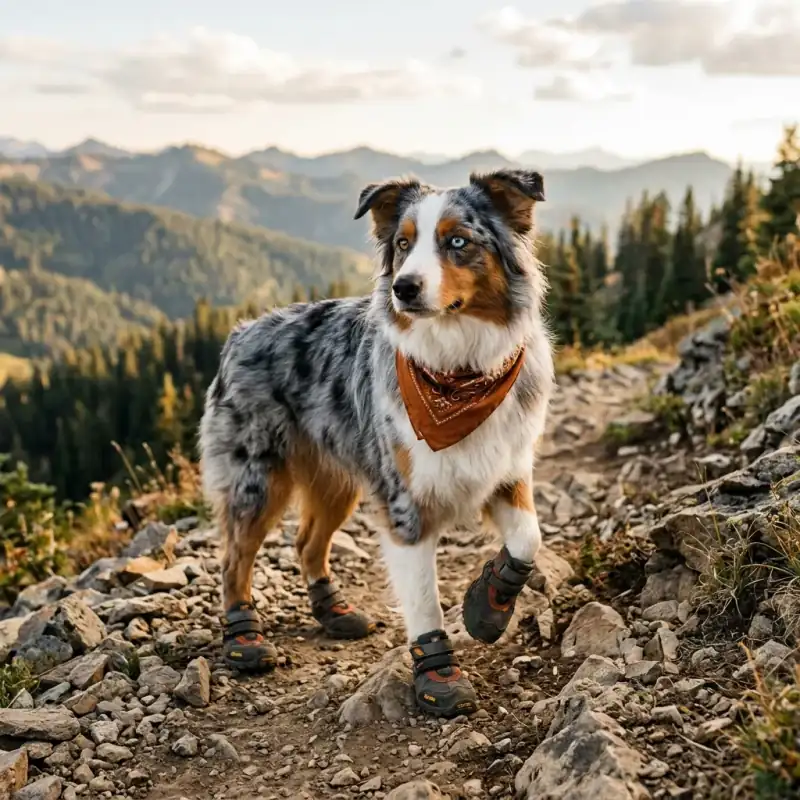
Dogs’ paw pads are tougher than they look — but they’re not armor. Scorching summer pavement, sharp scree on a mountain trail, road salt and ice in winter: all of it can burn, cut, or crack a pad, and a dog will often keep going on a hurt paw until the damage is done. Good boots prevent that. Bad ones get flung into the bushes on the first corner.
The trick is knowing when boots actually matter, choosing a pair that stays on, and introducing them so your dog will tolerate them. Here’s how — plus the pairs we’d trust, split by season, because summer boots and winter boots fail in opposite directions and the crossover is worse than most roundups admit.
The heat problem people underestimate
Here’s the number that surprises owners: when the air temperature is just 86°F, asphalt can reach around 135°F — and pads start to burn well below that. That figure comes straight from the American Kennel Club, and rock, sand and artificial turf get just as hot. A sunny afternoon that feels merely warm to you can be genuinely dangerous underfoot for your dog.
The quick field check is the hand test: press the back of your hand flat against the pavement and hold it there. If you can’t keep it there comfortably for several seconds (the AKC suggests about ten), it’s too hot for your dog’s paws. Your first line of defense is simple — walk on grass or shaded natural ground, and go out in the cool of early morning or evening. When you can’t avoid hot or rough surfaces, that’s what boots are for.
Want to check before you head out? We built a free pavement temperature tool that estimates ground temperature from the day’s air temperature.
When boots are worth it (and when they’re not)
Let’s be honest: your dog does not need boots for a mild evening stroll around the block. Their pads are built for normal ground. Boots earn their keep in specific situations:
- Hot pavement and sand in summer.
- Sharp, rocky or abrasive trails — scree, lava rock, sharp granite — where a torn pad can end a hike miles from the car.
- Ice, snow and road salt in winter, which crack pads and irritate skin.
- Protecting an injured or healing pad so a dog can still get outside.
If that’s the kind of walking you do, boots are one of the highest-value pieces of gear you can own. If it isn’t, save your money.
Hot ground and rock: the three we’d trust
| Boots | Best for | Why it stands out | Price |
|---|---|---|---|
| Ruffwear Grip Trex | Serious hiking | Vibram outsole, breathable mesh, proven durability | Check price → |
| Kurgo Blaze Cross | Trail-runner feel | Low-profile, great ground feel, dual ankle closures | Check price → |
| QUMY | Trying boots on a budget | Cheap, versatile for pavement and light trails | — |
Ruffwear Grip Trex — the serious hiking boot
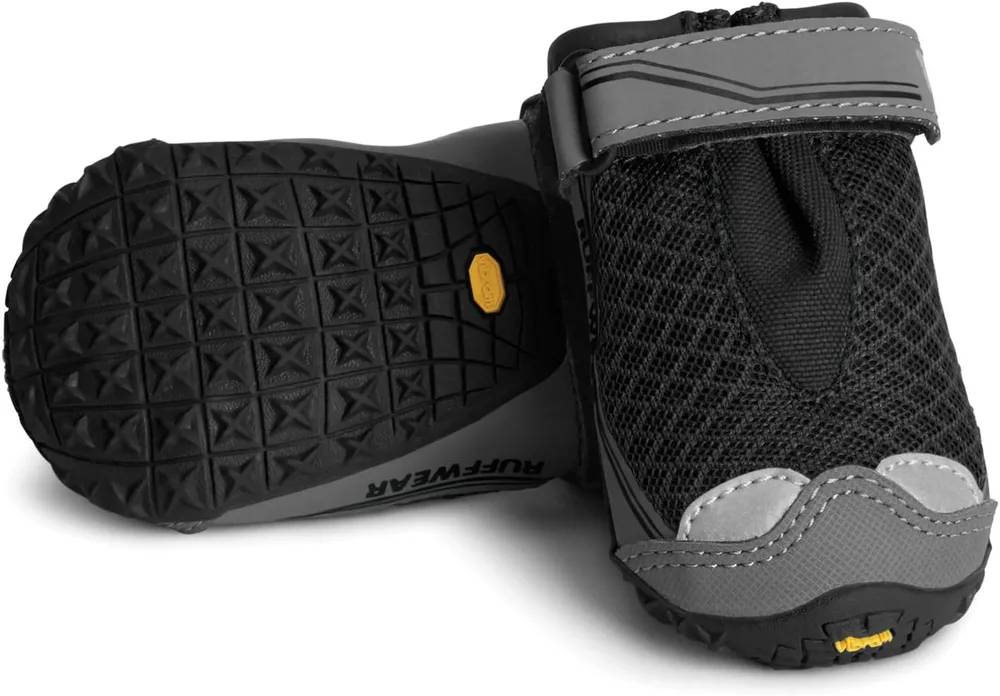
If your dog covers real trail miles, this is the benchmark. The Grip Trex uses a Vibram outsole — the same rubber found on human hiking boots — with a breathable mesh upper and a secure hook-and-loop closure that actually stays put. Independent testers rate it the top all-around choice for loose, rocky terrain and slick rock, and praise its durability over long distances. One important detail: like a lot of Ruffwear footwear, Grip Trex is sold in pairs of two, so you’ll want two sets to cover all four paws — and because many dogs have wider front paws than rear, buying two sizes is a feature, not a hassle.
Disclosure: some links below are affiliate links. If you buy through them we may earn a small commission at no extra cost to you.
Check Ruffwear Grip Trex on Amazon →
Kurgo Blaze Cross — trail-runner feel
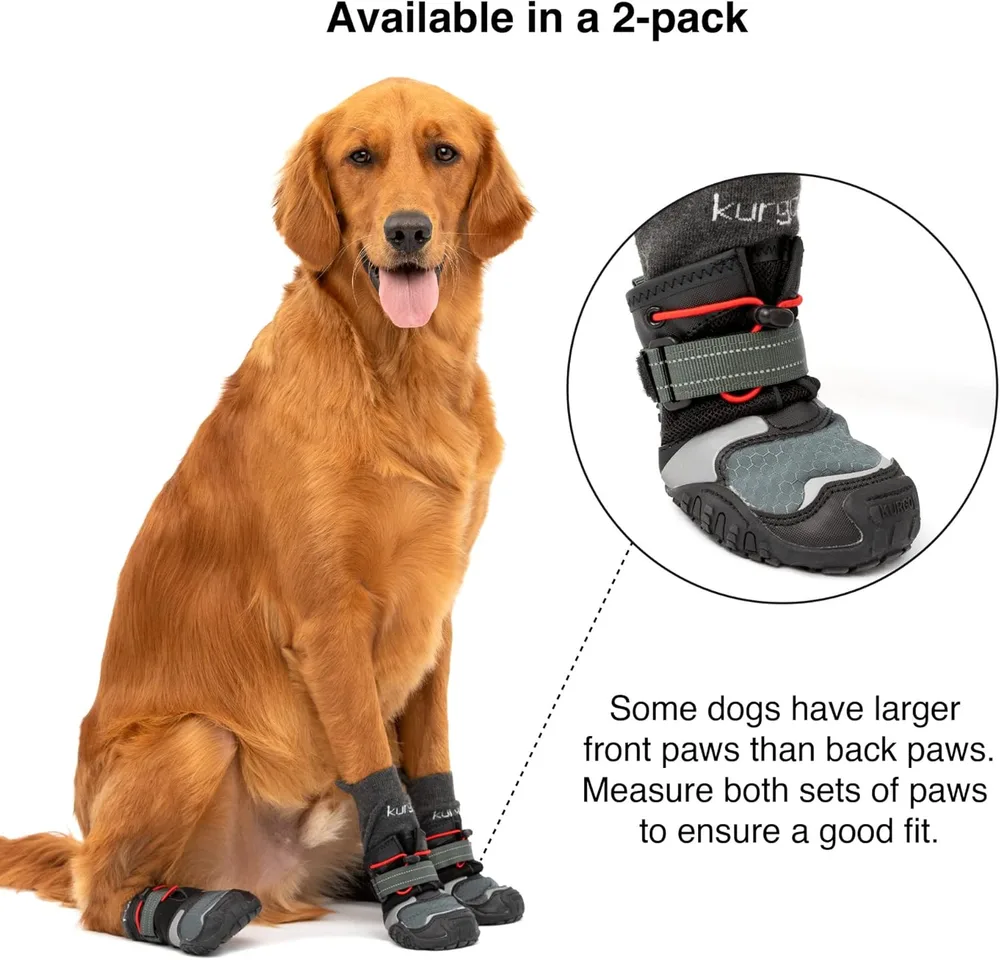
The Blaze Cross takes a different approach: instead of a structured boot, it’s closer to a trail-running shoe for dogs — low-profile, hugging the paw for good ground feel, with a water-resistant, breathable mesh upper. Its standout is the dual ankle closure — two separate straps above the paw — which testers found gives a notably secure fit, the thing that most often makes or breaks whether a boot stays on. A great pick for dogs who hate the “clunky” feel of a heavier boot but still need protection.
Check Kurgo Blaze Cross on Amazon →
QUMY — the budget way to find out
Before you spend big, you need to know one thing: will your dog even tolerate boots? The QUMY boots are the low-risk way to find out. They’re inexpensive, come in a wide range of sizes for small through large dogs, and handle everyday duty well — hot pavement, snowy sidewalks, light hiking, even hardwood-floor traction indoors. Be realistic about the trade-off testers flag: the sole can start to separate after roughly 50–100 miles and the Velcro loses grip over a few months of hard use. For casual use and for finding out whether boots are worth it for your dog, they’re hard to beat on price.
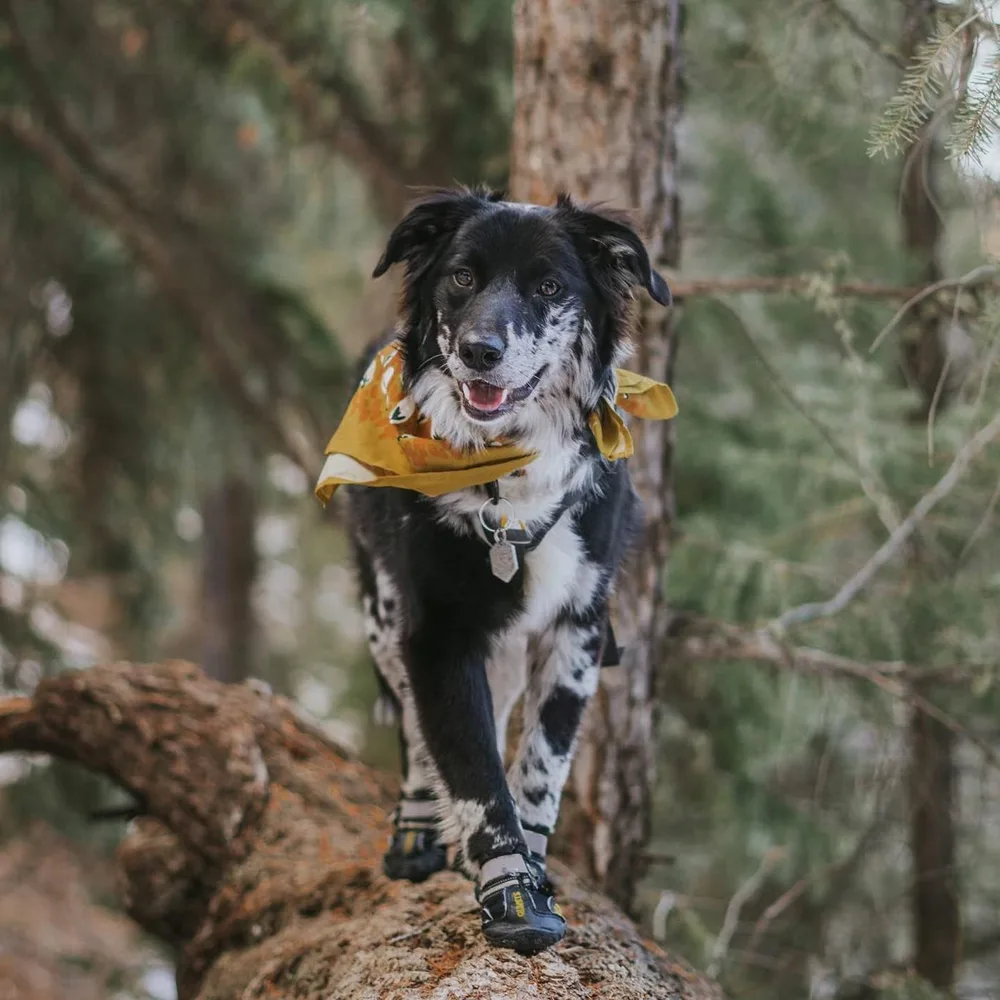
Check QUMY Dog Boots on Amazon →
Winter is a different problem, and the summer picks don’t transfer
Every boot above is chosen for heat and abrasion. Winter asks for the opposite things: keep snow out of the boot, grip ice, and don’t trap wet against the paw. The breathable mesh upper that makes the Grip Trex good in July is exactly what lets slush in come January — and Treeline Review, who have run a pair of Grip Trex for four years and report they still look practically new, are explicit that it is not their pick for snow.
So this is two pairs, not one. Here’s what actually holds up when the ground turns.
The boot that should win winter, and doesn’t
Shop by spec sheet and the answer looks settled. The Ruffwear Polar Trex is the winter-specific model: insulated, waterproof, a gaiter to seal out snow, a Vibram outsole. It is also the boot independent testing goes hardest at. Treeline found water leaked through it during testing despite the waterproof marketing, that snow collected inside the gaiter instead of being kept out by it, and that it took the longest to put on of anything in the test.
That is worth sitting with, because it is the whole argument against ranking by feature list. The boot carrying the most winter features failed at the one job a winter boot exists to do. We are not linking it, and it is deliberately absent from our product registry.
The two test teams disagree — and the disagreement is the useful part
Put the two independent testing outfits side by side and they recommend opposite constructions for snow:
| Treeline Review | CleverHiker | |
|---|---|---|
| Winter recommendation | Rubber-soled, tall, dual-closure boots | Mushing-style fabric booties |
| The reasoning | Waterproofing and grip on ice | Velcro cinches far tighter than the straps on rubber-soled boots, which is what keeps snowballs out |
| Named picks | Canada Pooch Soft Shield (winter), Wilderdog Booties (snow) | Non-Stop Long Distance, 1000-denier Cordura booties |
| The catch with it | Rubber traps moisture once wet — which is CleverHiker’s objection to it | Mushing boots wear through in five to 20 miles on hard surfaces — their own finding |
They are not really contradicting each other — they are describing different ground. Deep, cold, dry snow and packed trail rewards the mushing style: light, cinched tight at the top, nothing rigid to pack ice against. Mixed ground — ice, salted sidewalk, bare pavement between drifts — destroys a fabric bootie in a couple of outings and wants a rubber sole.
There’s a harder conclusion hiding in the overlap. CleverHiker actively discourage rubber-soled boots in wet conditions, because once moisture gets in it causes rubbing and sores. Treeline measured a leak in the boot marketed hardest on waterproofing in their test. Read together: no dog boot is reliably waterproof. The variable that actually matters is how well it seals at the top and how fast it dries — not what the box claims.
Canada Pooch Soft Shield — the winter pick
Treeline’s “best dog shoes for winter.” Fleece-lined, and tall enough that snow doesn’t simply drop in over the cuff — which, given everything above, is the spec that earns it the award. Dual closures, and fairly waterproof in their testing.
Two honest caveats from the same review: it goes out of stock constantly, and it is too warm to use in summer. This is a second pair for the cold half of the year, not a replacement for your trail boots.
Check Canada Pooch Soft Shield on Amazon →
Wilderdog Booties — best on snow
Treeline’s “best dog shoes for snow.” A grippy rubber sole that they found notably less slippery than the budget rubber boots, and better waterproofing than the sock-style mushing options — the middle ground between the two philosophies in the table above.
One sizing note that will decide whether they work: they run slightly large, so size down if your measurement falls between two sizes.
Check Wilderdog Booties on Amazon →
Muttluks All Weather — the protection pick
CleverHiker’s “best for foot protection,” scored 4.4 out of 5 across their test — and worth being precise about, because that is a protection award rather than a winter one. It earns its place here on the section’s own logic: mixed, abrasive winter ground is a protection problem. They also found it fits small dogs well, which is rarer than it should be.
One caveat on the name. Muttluks sell several lines, and the fleece-lined winter model is a different boot from the All Weather tested here — check which one you are adding to the basket.
The catch is process, not product: there’s no trying these on, so the measurement has to be right before you order. That is the same failure mode that ends most boot purchases, and it’s covered further down.
Check Muttluks All Weather on Amazon →
When the answer is wax rather than boots
CleverHiker tested Musher’s Secret wax alongside the boots and scored it 3.1 out of 5 — clearly below every boot on protection. That number is the point rather than a knock: wax is a different tool. It will not stop a cut, and it will not stop ice balling. What it does is condition the pad and put a barrier between it and road salt.
Which is worth knowing before you spend, because for a lot of winter walking the boot is not the first fix at all. Our winter paw care guide ranks the remedies by value and puts boots fifth — behind, among other things, a free haircut between the pads that prevents most ice balling on its own. It also carries the caveat that matters most here: a peer-reviewed study of ground reaction forces found boots do protect paws, but that putting them on a dog without prior conditioning changes their gait and can cause distress. A boot bought in November and first worn at a trailhead in January is a boot that comes off in the snow.
How to choose
Sole. For real trails, you want a grippy, puncture-resistant rubber sole (Vibram is the gold standard). For pavement and casual use, a simpler anti-slip rubber sole is fine.
Closure. This is what keeps the boot on. Look for a snug hook-and-loop strap that fastens above the ankle — two straps are better than one. A boot that only grips the paw itself will spin and slip off.
Upper, and height. Breathable mesh matters in summer — paws sweat and a sealed boot cooks. Winter inverts that, but not in the way the marketing suggests: since independent testing has found even the waterproof-marketed boots letting water through, treat a waterproofing claim as a bonus rather than the deciding spec. What reliably keeps snow out is height plus a closure that seals above the ankle, so nothing drops in over the cuff. Few boots do summer and winter well, so buy for your main season and accept that a serious two-season dog needs two pairs.
Fit above all. The best boot in the world slips off if it’s the wrong size. Which brings us to the step most people skip.
Measure — this is why boots fall off
A too-loose boot spins and flies off; a too-tight one gets shucked. Get it right:
- Have your dog stand with weight on the paw — it spreads wider than a lifted paw.
- Measure the width of the largest paw at its widest point (usually a front paw).
- Match that width to the specific maker’s size chart — sizing varies between brands.
- Measure front and back paws. Many dogs have wider front paws; some brands sell boots in pairs precisely so you can mix sizes.
Get your dog to actually wear them
The infamous high-stepping “moon walk” the first time boots go on? Totally normal — and it passes fast once a dog is moving on real ground. Ease the transition:
- Let your dog sniff the boots; pair them with treats.
- Put on one boot, treat, take it off. Build up to all four over a few short sessions indoors.
- Do a lap of the house or yard in them — praise, treats, keep it upbeat.
- Then hit the trail. Movement on a natural surface is what makes the weird feeling click into place.
Check the fit again after the first real walk, and inspect the pads. Even with boots, a paw balm can help toughen and condition pads on rough or hot ground — see our summer hiking safety guide for more on protecting paws in the heat, and our hiking-with-your-dog beginner’s guide for building up trail miles safely.
Winter is the other case for boots, and a different one: road salt and deicers are chemical irritants, and ice balling up between the toes ends more walks than cold does. Our winter paw care guide goes into that properly — including the free grooming fix that prevents most of it, and why boots are fifth on the list rather than first. Our guide to how cold is too cold to walk your dog covers what to watch for, and which breeds are genuinely built for it.
The bottom line
Reach for the Ruffwear Grip Trex if your dog is a serious trail hiker who needs a Vibram sole and long-haul durability (just remember it’s sold in pairs). Choose the Kurgo Blaze Cross for a lighter, trail-runner feel with a very secure dual-strap fit, and the QUMY to find out cheaply whether your dog will tolerate boots at all, or for casual pavement-and-snow duty. For winter that list changes rather than extends. The Canada Pooch Soft Shield is the fleece-lined, tall-cuffed pick for cold-weather walking; Wilderdog Booties are the better answer on snow specifically, sized down if you’re between sizes; Muttluks All Weather is the protection pick, and the one to measure most carefully for. Skip the Polar Trex, whatever the spec sheet says. And if your winter problem is salt and ice balling rather than cuts, read the winter paw care guide before you buy anything — the fix that works best there is free.
Whatever you pick, measure the paws, fasten above the ankle, and introduce them slowly indoors first — that last step has a peer-reviewed study behind it, not just etiquette. Do that, and boots go from a comedy of flung footwear to gear that quietly saves your dog’s pads — mile after mile.
One thing worth saying if you’re buying for someone else: boots are the hardest item in dog gear to size correctly, which makes them a poor gift unless you have the paw measurements in hand. Our gift guide for adventure dog owners sorts the whole category by exactly that problem — what you can safely buy without measuring the dog, and what you can’t.
And if it’s winter you’re preparing for, buy them in October rather than January — the conditioning period is the reason, and the winter dog gear checklist sets out the whole season’s kit in the order that actually makes sense.
Sources
- American Kennel Club — How to Protect Dog Paws From Hot Pavement
- AVMA — Warm Weather Pet Safety
- Treeline Review — Best Dog Shoes and Boots (Tested) — winter and snow awards; the Polar Trex leak finding
- CleverHiker — Best Dog Boots (Tested & Reviewed) — mushing-style vs rubber-soled for snow; Muttluks and Musher’s Secret scores
- Ruffwear — Grip Trex Dog Boots (sold in pairs)
Frequently asked questions
How hot is too hot for a dog to walk on pavement?
Hotter than most people think. When the air is 86°F, asphalt can reach about 135°F — hot enough to burn paw pads. Use the hand test: press the back of your hand flat on the pavement and hold it there. If you can't keep it there comfortably for several seconds, it's too hot for your dog. Walk on grass or shaded natural surfaces, go out in the cool early morning or evening, or protect the paws with boots.
Do dogs actually need boots, or is it a gimmick?
For everyday neighborhood walks in mild weather, most dogs are fine barefoot — their pads are tougher than they look. Boots earn their place in specific conditions: scorching pavement, sharp or rocky trails, ice and road salt in winter, and to protect an injured or healing pad. If your dog hikes rough terrain or you walk on hot city streets in summer, good boots genuinely prevent cuts, burns and cracked pads.
Why won't my dog keep their boots on?
Almost always fit or introduction, not the boots. A boot that's too loose spins or slips off; one that's too tight gets shucked. Measure each paw and match the size chart, make sure the closure is snug above the ankle, and introduce them slowly indoors with treats before the first walk. The high-stepping 'moon walk' is normal for the first few minutes — dogs adjust once they're moving on a real surface.
Are winter dog boots different from summer ones?
They fail in opposite directions, so yes. A summer boot is built to breathe — mesh uppers stop paws cooking against hot ground. That same mesh is what lets slush and snow in during winter. A winter boot wants height and a closure that seals above the ankle so snow can't drop in over the top, plus a sole that grips ice. Treeline Review, who rate the Ruffwear Grip Trex the best hiking boot they've tested, are explicit that it is not their pick for snow. If you walk in both seasons, that's two pairs, not one.
Are the insulated waterproof winter boots worth the money?
Not automatically — check the testing rather than the spec sheet. The Ruffwear Polar Trex is the obvious winter-specific model (insulated, waterproof, gaiter, Vibram sole) and it is the one independent testers go hardest at: Treeline Review found water leaked through it during testing despite the waterproof marketing, snow collected inside the gaiter instead of being kept out, and it took the longest of anything they tested to put on. Height and a closure that seals reliably matter more than an insulation claim.
How do I measure my dog for boots?
Have your dog stand so the paw bears weight (it spreads wider than when lifted), then measure the width of the largest paw at its widest point — usually a front paw. Match that width to the maker's size chart. Measure both front and back paws: many dogs have wider front paws than rear, which is why some brands, like Ruffwear, sell boots in pairs so you can buy two sizes if you need to.
Are dog shoes for hot pavement the same as dog boots?
Same product, different word — "dog shoes" and "dog boots" are used interchangeably, and for hot ground you want the same things either way: a rubber sole thick enough to insulate, a breathable upper so the paw is not cooking inside it, and a closure that fastens above the ankle so it stays on. The reason to bother is the gap between air and ground temperature. At 86°F air, asphalt can reach around 135°F. Boots are the answer when you cannot avoid hot surfaces; when you can, shifting the walk to early morning or grass is better than any footwear.
Comments
Got a question, a tip, or a correction? Leave a comment — no account, no sign-in. Just your name and your thoughts.
Loading comments…