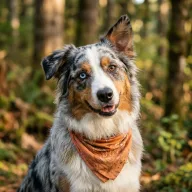
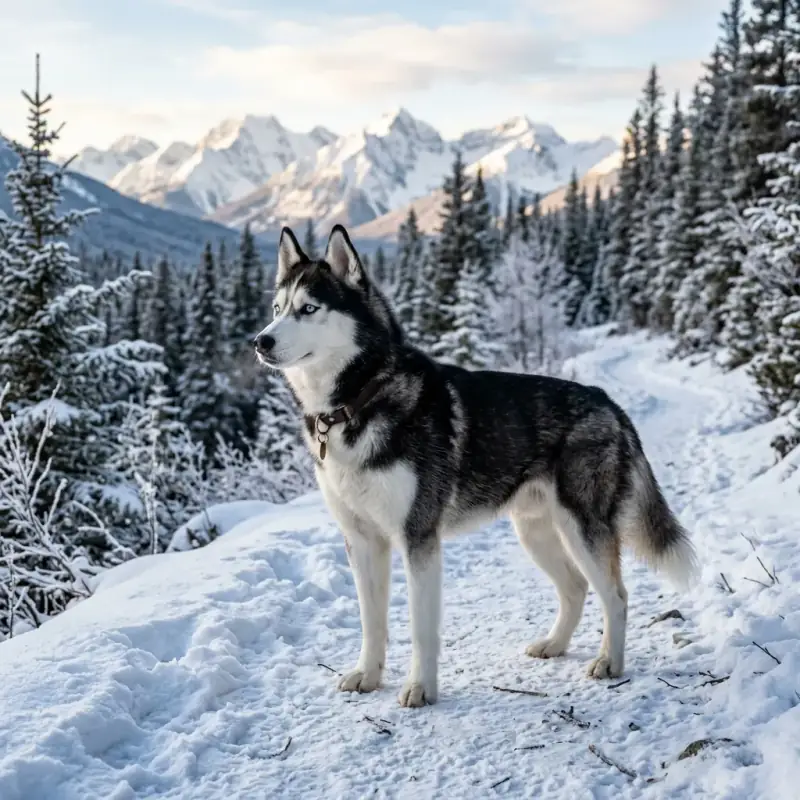
Every year, thousands of Siberian Huskies are surrendered to shelters and rescues, and the reasons are almost always the same three: it runs off, it destroys things, and it is “too much dog.” Every one of those complaints describes a Husky doing precisely what nature and centuries of breeding designed it to do. The problem is never the dog. It is the gap between the dog people think they are buying, a beautiful, wolfish, blue-eyed companion, and the one they actually get: a purpose-built endurance sled dog with an engine and an independence to match.
Get that gap right and the Husky is a magnificent, sociable, hardy adventure partner. Get it wrong and it is heartbreak for everyone, dog included. This guide is written to close the gap. It covers what the Husky is genuinely brilliant at, and it does not flinch from the two facts that decide whether you and this breed will work: the remarkable physiology that makes a suburban walk meaningless to it, and the prey-drive-and-recall reality that the AKC itself says means this dog can essentially never be trusted off-leash.
Siberian Husky at a glance
| Height | 21–23.5 in (males), 20–22 in (females) |
| Weight | 45–60 lb (males), 35–50 lb (females) |
| Life expectancy | 12–14 years |
| Coat | Dense double coat, built for Arctic cold |
| Shedding | Heavy year-round, plus dramatic seasonal coat “blows” |
| Energy | Very high; a purpose-built endurance runner |
| Adventure verdict | A superb cold-weather distance companion — for an owner who accepts a lifetime of leashes and secure fences |
Heights, weights, life expectancy and health notes come from the official AKC breed standard. Our verdict: as a running, bikejoring, snow-country adventure dog the Husky is close to unmatched: tireless, hardy, and built for exactly the kind of long, cold days that flatten softer breeds. But it comes with a permanent condition attached: containment. If you cannot commit to leashes, harnesses and a genuinely secure yard for the next decade-plus, this is not your breed, however much you love the look.
The dog behind the reputation
The Siberian Husky was developed by the Chukchi people of north-eastern Asia as an endurance sled dog: an animal that could pull a light load over vast distances in brutal cold, on relatively little food, working in a team. Almost everything distinctive about the breed traces back to that job.
It explains the temperament, which is one of the breed’s best features. Sled dogs had to live and work in close cooperation with other dogs and people, so Huskies are famously outgoing and friendly, with family, with strangers, often with other dogs. The flip side, which surprises people, is that this makes them useless as guard dogs: a Husky greets the world as a friend. It also explains the independence. A sled dog on the trail has to make decisions, and Huskies retain a self-directed, “what’s in it for me?” streak that is nothing like the eager-to-please biddability of a retriever.
And it explains the drive to run. This is not a dog that runs to burn off energy; it is a dog that runs because running is what it is for. That instinct, beautiful in harness, is precisely what makes an off-leash Husky in open country such a risk.
The engine: an ultra-endurance athlete in your living room
To understand why a normal walk does nothing for a Husky, you have to understand just how extraordinary the sled-dog machine really is, and here the science is genuinely astonishing.
Researchers studying racing sled dogs have documented a metabolic feat no human endurance athlete can match. When a person runs a marathon, they burn through stored muscle glycogen and hit “the wall.” Sled dogs, running distances that dwarf a marathon day after day, do something different: within roughly 24 to 48 hours of sustained running, they switch their metabolism, sparing glycogen and drawing energy almost entirely from fat. The result, documented in studies of dogs running around 100 miles a day for consecutive days, is that they return to near-resting metabolic values while still running, effectively refusing to tire the way other animals do. Racing sled dogs have been estimated to burn on the order of 10,000+ calories a day sustaining it.
Your pet Husky is not a racing sled dog, but it carries that same engineering. And this is the honest, practical point: a Husky is built to run all day, so a lap around the block is, to its body, essentially nothing. The breed’s exercise requirement is not a suggestion; it is the load a serious endurance athlete needs to stay sane. An hour or two of genuinely hard daily activity is the floor. The best outlets play to the machine:
- Running, canicross and bikejoring — letting a Husky pull you on foot or bike, in a proper harness, is closer to its actual purpose than anything else you can do in a city.
- Hiking, especially in cool weather, where the endurance and the sure feet shine.
- In snow country, actual sledding, skijoring or scootering — the real thing, and the happiest you will ever see the breed.
Skimp on this, and the same engine that makes a Husky a wonderful trail dog goes to work on your house and your fences instead. If you are unsure how to scale exercise for your dog’s age and fitness, our guide to how much exercise a dog really needs sets sensible loads.
The non-negotiable: recall, prey drive and the leash
One fact should decide your purchase, and the AKC puts it as plainly as anyone could: it is “vital to keep the dog on a leash, in harness, or in a fenced yard at all times.”
Three traits combine to make this absolute. First, prey drive: Huskies have a strong instinct to chase fleeing animals, and a Husky that spots a squirrel, cat or rabbit can switch off its ears entirely; in some cases the chase ends badly for the smaller animal. Second, the instinct to run, described above, which means a loose Husky does not potter about nearby; it goes. Third, a famously independent recall: this is not a breed that reliably comes back because you asked, and pretending otherwise gets dogs killed on roads.
Add to that the breed’s reputation as an escape artist. Huskies dig under fences, scale them, slip collars and exploit gaps that would never occur to another dog. Secure containment for a Husky means genuinely secure: tall fences, dig barriers, and no wishful thinking about the gate.
None of this makes the Husky a lesser dog. It makes it a particular dog, with a particular management requirement. Build a rock-solid recall anyway, on a long-line, and treat off-leash freedom in open, unfenced country as something most Huskies will simply never earn, because the AKC, the rescues and physics all agree on this one.
Disclosure: some links below are affiliate links. If you buy through them we may earn a small commission at no extra cost to you.
Check Long-Line Leashes on Amazon →
A live GPS tracker is not optional peace of mind for this breed so much as basic insurance. If a Husky does get loose, a tracker turns a frantic, hours-long search into a location on your phone; see our GPS tracker guide.
Check Tractive GPS on Amazon →
Heat: the Arctic dog’s real weakness
A Husky’s coat is engineered for cold most dogs could not survive; the breed works comfortably in temperatures far below freezing. That superpower is a liability in summer. Huskies overheat more easily than short-coated breeds, and heat is a genuine danger, not a discomfort.
The rules are simple and firm: exercise in the cool of early morning or evening, never in the heat of the day; always carry water and seek shade; watch closely for early signs of overheating; and never shave the coat, which insulates against heat as well as cold and protects the skin. On hot pavement, check the ground with your hand. Our guide to how hot is too hot to walk your dog has the thresholds worth memorising for this breed in particular.
Trainability: intelligent, not obedient
Huskies are smart, but their intelligence is the independent, problem-solving kind, not the “tell me what to do and I’ll do it” kind. They were bred to think for themselves on the trail, and they bring that same self-interest to training. This is not a Labrador that lives to please you; it is a dog that will weigh whether your request is worth its while.
That means training a Husky rewards patience, consistency, genuinely motivating rewards and a sense of humour, and it punishes the expectation of instant obedience. Prioritise recall (knowing it may never be bomb-proof), a reliable “leave it” for the prey drive, and calm leash manners for a dog bred to pull. Early, generous socialisation banks on the breed’s natural friendliness. And accept the vocals: Huskies rarely bark but are gloriously, loudly “talkative,” and no amount of training turns that off.
Gear that fits a Siberian Husky
A Husky’s athletic, medium build and pulling instinct shape the kit list:
- A proper harness. For a breed built to pull, a well-fitted harness is essential — for everyday control, and a dedicated pulling harness if you take up canicross or bikejoring. The Ruffwear Front Range is a sound everyday choice.
Check Ruffwear Front Range on Amazon →
- A long-line and a GPS tracker — covered above, and both are close to mandatory for this breed rather than nice-to-haves.
- Cool-weather thinking, not cold-weather gear. A Husky needs no coat; it needs heat management. Your summer kit is water, shade and timing, not insulation.
One caution for gift-buyers, and it is a safety point rather than a comfort one. Everything above about escaping means a Husky harness that fits loosely is not merely uncomfortable — it is the failure mode. With a 35–60 lb range across the breed, that is not something to guess at from a wishlist. Our gift guide for adventure dog owners marks which kit is safe to buy unmeasured.
Health and lifespan
Huskies are, encouragingly, one of the more robust purebred dogs, with a 12 to 14 year lifespan and, as the AKC notes, a relatively low incidence of hip dysplasia and eye disease compared with many breeds. Responsible breeders still screen, and you should ask about:
- Hip dysplasia — lower incidence than many breeds, but still screened; ask for the parents’ scores.
- Eye conditions — including juvenile cataracts, corneal dystrophy and progressive retinal atrophy; a good breeder health-tests eyes.
- The breed’s efficient metabolism is worth a note: Huskies “maintain their weight on less food than similar-size breeds,” in the AKC’s words, so it is easy to overfeed one. Keep it lean.
None of this is a diagnosis. It is the honest health picture of the breed — screen through a good breeder and manage your individual dog with your vet.
Grooming and shedding
There is no gentle way to say this: Huskies shed spectacularly. The dense double coat sheds steadily year-round and then “blows” the entire undercoat once or twice a year, over a few dramatic weeks, in clumps. During a coat blow you will brush daily and still find fur everywhere; the rest of the year a weekly brush with an undercoat rake keeps it manageable. The upside is that the coat is otherwise low-maintenance and surprisingly self-cleaning (Huskies are fastidious and have little doggy odour), so grooming is less about washing and more about staying ahead of the fur. And, once more: never shave it — our guide to the autumn shed covers what clipping a double coat does to the regrowth.
Is a Siberian Husky right for you?
Sit with four questions before you commit:
- Can you meet the exercise requirement of an endurance athlete, every day, for years? Not walks. Real, hard activity. If not, the Husky’s engine will redirect into destruction and escape.
- Can you live with permanent containment? Leashes, harnesses and a genuinely secure fence, for the dog’s whole life, with off-leash freedom off the table in open country. This is the deal-breaker for most people, and it is better to face it now.
- Can you manage heat and shedding? A summer-long duty of care and a home that will never be entirely fur-free.
- Do you want a partner, not a subordinate? The Husky’s independence and friendliness are features, not bugs, but if you want an obedient, protective, homebody dog, this is emphatically the wrong breed.
Get comfortable with all four and the Husky rewards you with a sociable, spectacular, tireless companion built for the cold, punishing days softer dogs can’t take, plus a lifetime of that unmistakable Husky “talk.” Balk at any of them and the honest move is to pick a dog whose needs fit your life, and leave the Husky to someone who can give it the miles it was born to run.
The other northern powerhouse people cross-shop is the bigger, load-hauling Alaskan Malamute — a genuinely different animal, bred for freight rather than speed, and the better choice if you want to hike under load rather than run. If that is the decision in front of you, we put the two head to head on the question people actually ask — which handles the cold better — and the honest answer is that neither does, which is what makes the rest of the comparison useful. The third of the trio, the Samoyed, is the one that most needs to live inside with its family. For the rest of the field measured against the veterinary data, see our hub guide, The Best Adventure Dog Breeds for Hiking & Camping. Our cold-weather breed guide goes further into the anatomy behind that coat — including the counter-current heat exchange in the paws — and, more usefully, where “built for cold” stops being true. If it is raw drive you are drawn to, the German Shepherd and Belgian Malinois offer it in a very different, far more biddable package.
Sources
- American Kennel Club — Siberian Husky breed profile
- Miller BF, et al. Metabolic and Molecular Responses in Ultra-Endurance Sled Dogs / Glucocentric Metabolism in Ultra-Endurance Sled Dogs. Integrative and Comparative Biology (2021)
- Scientific American — Learning Fat-Burning Secrets from Sled Dogs
- Siberian Husky breed information — prey drive, recall and containment (DogTime)
Frequently asked questions
Can a Siberian Husky be let off-leash?
For most Huskies, honestly, no. The AKC states plainly that it is 'vital to keep the dog on a leash, in harness, or in a fenced yard at all times.' Huskies combine a strong prey drive, an instinct to run, and a famously selective recall, a combination that means a Husky off-leash in open country can be gone over the horizon before you finish calling it. This is the single most important thing to understand before buying one, and the reason so many end up in rescue.
How much exercise does a Siberian Husky need?
A lot: this is a purpose-built endurance athlete. Sled dogs can run for days, and while your pet Husky will not do the Iditarod, that engine still needs a serious outlet: an hour or two of hard daily exercise at minimum, ideally including running, bikejoring, canicross or hiking. A short walk around the block does essentially nothing for a Husky. An under-exercised one becomes destructive, vocal and a determined escape artist.
Are Siberian Huskies good guard dogs?
No, and it is one of the breed's charms. Huskies were bred to live and work in close-knit teams and are famously friendly, to family, strangers and often other dogs alike. A Husky is far more likely to greet an intruder than to challenge one. If you want a watchdog, this is the wrong breed; if you want a sociable, people-loving companion, it is a real strength.
Do Siberian Huskies handle heat well?
Poorly. That plush double coat is engineered for Arctic cold (Huskies evolved to work in temperatures far below freezing), and it makes hot weather genuinely dangerous for them. In summer, exercise in the cool of early morning or evening, always provide water and shade, watch closely for overheating, and never shave the coat, which actually helps regulate temperature. Heat management is a core responsibility of Husky ownership, not an afterthought.
Why do Siberian Huskies end up in shelters so often?
Because they are bought for their looks and surrendered for their behaviour. People fall for the wolfish appearance and blue eyes, then discover a high-energy, high-prey-drive escape artist that cannot be trusted off-leash, sheds enormously, 'talks' loudly, and needs far more exercise than they expected. None of that is the dog's fault; it is a working sled dog behaving exactly as bred. Understanding the reality before you buy is how you avoid becoming part of that statistic.
Do Siberian Huskies shed a lot?
Enormously. The double coat sheds year-round and then 'blows', shedding the entire undercoat in dramatic clumps, once or twice a year, typically over a few intense weeks. During a coat blow you will be brushing daily and vacuuming constantly. The rest of the year is more manageable with a weekly brush, but there is no such thing as a low-shedding Husky, and the coat should never be shaved to reduce it.
Comments
Got a question, a tip, or a correction? Leave a comment — no account, no sign-in. Just your name and your thoughts.
Loading comments…